


“Clean” and “sanitized” get used interchangeably in everyday conversation, but they describe two different outcomes. Cleaning removes what you can see: crumbs ground into the fibers, mud tracked in from the yard, coffee that missed the mug on its way to the counter.
Sanitizing addresses what you can’t see: the bacteria, viruses, and microorganisms that settle into carpet padding and upholstery fibers no matter how tidy a room looks. A carpet can appear spotless right after a routine appointment and still carry a bacterial load that has nothing to do with visible dirt. This distinction matters more than most homeowners realize, especially when someone in the house has been sick, a new pet has just moved in, or allergy symptoms seem to flare up indoors more than they should.
This confusion isn’t a homeowner’s fault. Cleaning companies, product labels, and even everyday conversation blur the two terms constantly, and most people have never had a reason to look closely at what separates them. Understanding where cleaning stops and where a carpet sanitizing service picks up the job helps homeowners decide when a standard appointment is enough, and when it’s genuinely worth asking for both.
What Cleaning Actually Does
Cleaning is a physical removal process. It lifts soil, debris, hair, and stains out of carpet fibers using suction, agitation, water, and cleaning solution. The goal is to restore the look and feel of the carpet: brighter color, no visible spots, no crunch underfoot from ground-in dirt. A good cleaning also removes a meaningful amount of surface-level allergens like dust and pollen, which is why homes tend to feel fresher and smell better immediately afterward.
What cleaning does not do, on its own, is address microscopic organisms living below the surface. Standard detergents are formulated to break down soil and lift it out during extraction, not to kill bacteria or neutralize viruses. That’s a different chemical job entirely, built around different active ingredients and different contact requirements.
A cleaning solution can be excellent at breaking the bond between an oily stain and a carpet fiber while having almost no measurable effect on the bacteria sitting a few millimeters away in the same spot.
Vacuuming and Surface Debris Removal
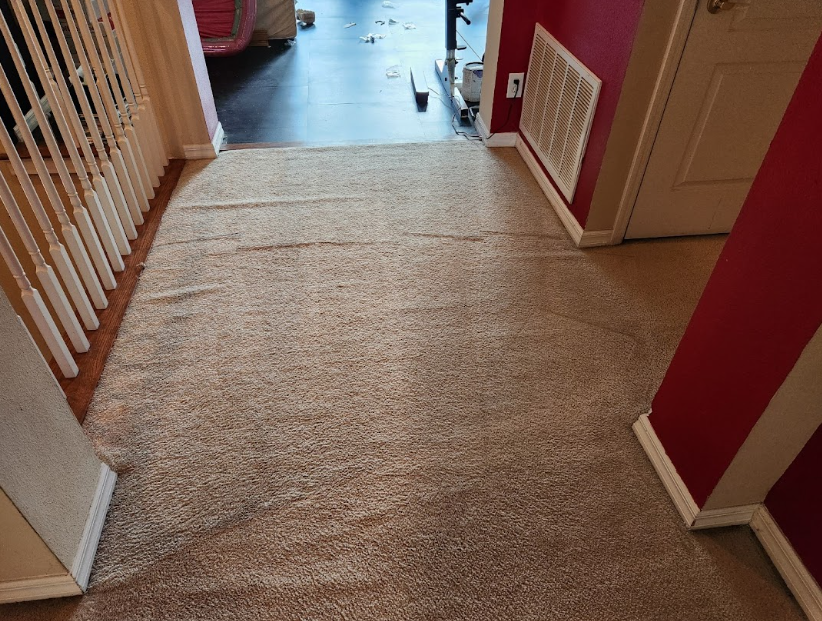
Vacuuming is the first line of defense, and it matters more than most people give it credit for. Regular vacuuming pulls loose dirt, pet hair, and dry debris out of the top layer of carpet fibers before it gets ground in by foot traffic. Skipping this step, or vacuuming too infrequently, lets that debris work its way deeper into the pile where it becomes abrasive and starts to dull the fibers over time, shortening the carpet’s usable life well before it would otherwise need replacing.
Vacuuming alone, though, has a shallow reach. It can’t pull anything out of carpet padding, and it does nothing for oils, residues, or organic material that has already bonded to the fiber. A vacuum is designed to move air and lift loose particles, not to break chemical bonds or reach a bacterial colony sitting below the surface. It’s an essential daily habit, but it was never meant to be the whole solution.
Hot Water Extraction and Deep Soil Removal
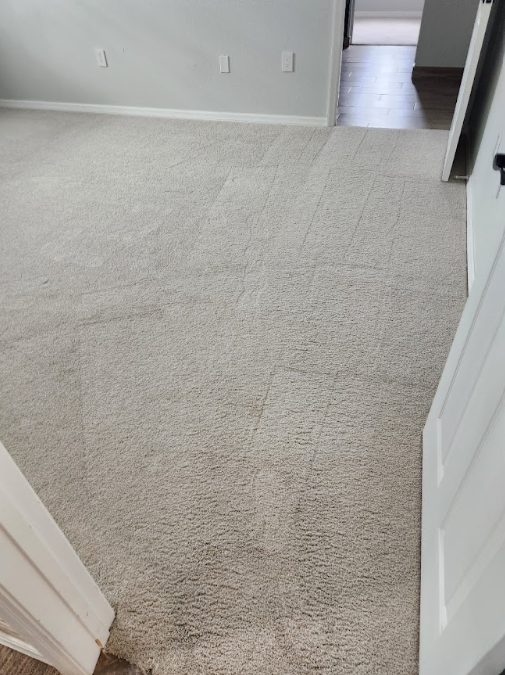
Professional hot water extraction goes further than vacuuming by injecting a cleaning solution deep into the carpet and immediately extracting it along with the loosened soil. This is the method most homeowners picture when they think of a professional appointment, and it’s genuinely effective at removing embedded dirt, oils, and staining agents that a vacuum could never touch.
In Florida’s humid climate, this step carries extra weight. A home getting regular carpet cleaning in Clearwater deals with more humidity-driven soil buildup than a home in a drier climate, since damp air makes dust and debris stick to fibers more readily, and shoes tracking in moisture from outside leave behind more than dry dirt ever would.
Hot water extraction handles that soil load well, pulling both the moisture and the debris out in the same pass. What it isn’t designed to do is neutralize bacteria on contact, since standard extraction solutions are built around soil removal chemistry rather than antimicrobial action. The two jobs use different tools for a reason.
What Sanitizing Actually Does
Sanitizing is a chemical process, not a physical one. Instead of lifting soil out of the carpet, a sanitizing treatment applies an EPA-registered antimicrobial solution formulated to reduce bacteria, viruses, and fungal growth to a specified safe level.
The solution needs contact time to work, which is why a proper sanitizing pass is applied as a distinct step rather than folded quietly into a regular cleaning cycle. It doesn’t rely on suction or agitation to do its job. It relies on the solution itself doing chemical work on what’s already there, breaking down cell walls and disrupting the organisms directly rather than physically removing them.
This is also why sanitizing can’t simply be swapped in for cleaning, or the other way around. A surface loaded with visible soil reduces how effectively a sanitizing solution can make contact with the material underneath, and a sanitizing pass with no prior cleaning is working against a layer of debris it wasn’t formulated to move. The two processes are sequential and complementary, not interchangeable.
Targeting Bacteria, Viruses, and Fungi
Carpet fibers and the padding beneath them create an environment that microorganisms can survive in for surprisingly long stretches, particularly in a warm, humid climate where drying takes longer between cleanings. Bacteria from tracked-in outdoor soil, pet accidents, or illness in the household can persist well below the surface where a vacuum or standard extraction pass never reaches. Fungal spores behave similarly, settling into damp padding and taking hold in spots that rarely get direct airflow.
A dedicated sanitizing treatment is formulated specifically to reduce that microbial load, targeting the organisms themselves rather than the dirt they happen to be sitting in. This is the layer of protection that a standard cleaning simply isn’t built to provide, no matter how thorough the extraction pass or how bright the carpet looks afterward.
Reaching Where Cleaning Solutions Don’t
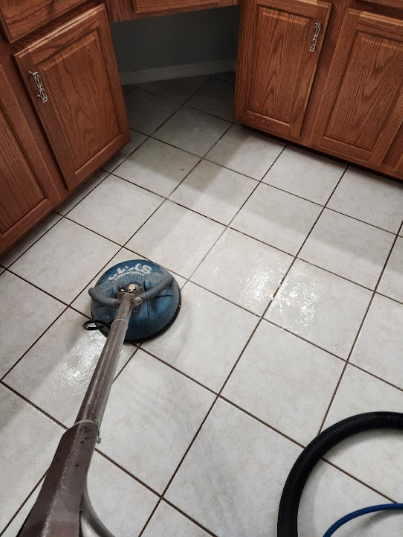
Grout lines behave a lot like carpet padding in this respect. They’re porous, they trap moisture, and they hold onto bacteria long after the surface looks clean. A homeowner who books tile and grout cleaning for a kitchen or bathroom floor is often surprised to learn that a visually clean grout line can still be harboring bacteria the mop never touched, since standard mopping pushes soil around more than it removes it, and a mop head itself can spread bacteria from one room to the next rather than eliminating it.
Sanitizing solutions are formulated to penetrate that same porous surface and address what’s actually living inside it, not just what’s sitting on top. This applies to carpet padding, grout lines, and upholstery cushioning alike, anywhere moisture and organic material have a place to settle in and stay put between cleanings.
Signs Your Home Might Need Sanitizing Between Scheduled Cleanings
A few practical signals tend to show up before anyone consciously thinks to ask about sanitizing. A musty smell that returns within days of a cleaning, even though the carpet looks fine, often points to bacterial or fungal activity rather than leftover soil, since soil-related odor usually fades once the source is physically removed. Pet odor that keeps resurfacing on humid days is another common sign, since heat and moisture reactivate bacteria left behind at the site of an old accident even after the stain itself is long gone.
A household noticing more frequent minor illnesses passing between family members, especially with young kids who spend a lot of time on the floor, is worth a second look too. It’s not a guarantee that carpet or upholstery is the cause, but soft surfaces are one of the more overlooked reservoirs for germs moving through a home, right alongside doorknobs and light switches that get wiped down far more often.
None of these signs are proof on their own, but together they’re a reasonable prompt to ask a provider whether a sanitizing pass makes sense at the next appointment rather than waiting for the next scheduled cleaning to roll around on its own.
Why People Assume One Includes the Other
Part of the confusion comes from how cleaning services have historically been marketed. Terms like “deep clean” and “sanitize” get used loosely in advertising, and it’s easy to walk away assuming a thorough scrubbing automatically covers germ removal too. There’s also a reasonable, if incorrect, assumption that anything strong enough to lift stubborn stains must be strong enough to kill bacteria along the way.
In reality, cleaning solutions are chosen for their ability to break down soil, dissolve oils, and lift discoloration, properties that don’t overlap neatly with antimicrobial effectiveness. A solution can be excellent at stain removal and have little to no impact on bacteria, and the reverse is true as well.
There’s also a visual bias at play. Homeowners judge cleanliness with their eyes, and a carpet that looks bright and smells fresh reads as “clean” in every sense of the word. Bacteria don’t leave a visible signature the way a wine stain does, so there’s no obvious cue prompting someone to ask whether sanitizing was part of the appointment. Without that visual trigger, sanitizing tends to get treated as optional or forgotten altogether, even in situations where it would make a real, practical difference to the household.
Scent adds to the confusion too. A citrus or “fresh linen” scented cleaning solution creates a sensory impression of hygiene that has nothing to do with the product’s actual antimicrobial properties. A carpet can smell like a spring meadow and still carry a bacterial load that a standard cleaning solution never touched, since fragrance and disinfecting power are entirely separate formulation choices.
Common Myths About Cleaning and Sanitizing
A few misconceptions come up often enough that they’re worth addressing directly. The first is the belief that steam alone sanitizes. High-temperature steam can reduce some surface bacteria given enough sustained contact time, but a standard hot water extraction pass moves too quickly through the carpet to reliably hit sanitizing-level results on its own, which is exactly why a dedicated sanitizing step exists as a separate offering rather than being assumed into every appointment.
The second myth is that sanitizing is only necessary in commercial settings like medical offices or daycares. Homes deal with the same categories of bacteria and viruses that commercial spaces do, just without the same regulatory oversight prompting regular sanitizing as a matter of course. A household with young kids on the floor, a pet still working through house training, or a family member recovering from illness has just as legitimate a reason to sanitize as any office does.
The third myth is that any cleaning solution labeled “antibacterial” on the bottle performs the same job as a professional-grade sanitizing treatment. Over-the-counter products vary widely in concentration and EPA registration status, and many aren’t formulated for the dwell time or contact method needed to actually reduce bacterial load on a carpet or upholstery surface the way a professional treatment is.
A fourth myth worth mentioning is the idea that sanitizing leaves a home smelling like a hospital or a locker room. Older antimicrobial formulas earned that reputation, but current EPA-registered products used by trained crews are designed to be low-odor and safe for kids and pets once dry. Homeowners who avoided sanitizing in the past because of the smell they remember from years ago are often surprised at how little scent is left behind with a modern product applied correctly.
When Standard Cleaning Is Enough
Not every appointment needs a sanitizing add-on, and it’s worth saying plainly that most routine maintenance cleanings don’t require one. If the household is healthy, there’s no new pet adjusting to the home, and the goal is simply to keep carpets looking fresh and extending their lifespan, a standard cleaning covers that job well.
This applies to area rugs too. A wool or synthetic rug cleaning appointment focused on removing seasonal pollen, sand, and everyday foot traffic soil doesn’t automatically need an antimicrobial step layered on top, since the goal there is restoring appearance and fiber condition rather than addressing a specific health concern.
The same logic applies to a household on a straightforward maintenance plan for routine carpet cleaning, where there’s no particular illness, new pet, or allergy concern driving the appointment. Sanitizing is a targeted addition for specific situations, not a default upgrade every household needs on every visit, and treating it that way keeps costs reasonable while still covering the moments that genuinely call for it.
Situations That Make Sanitizing Worth Adding to the Routine
There are a handful of situations where adding a sanitizing step stops being optional and starts being genuinely worth the investment. These tend to share one thing in common: a health-related reason to reduce microbial load beyond what standard cleaning addresses.
Illness in the Household
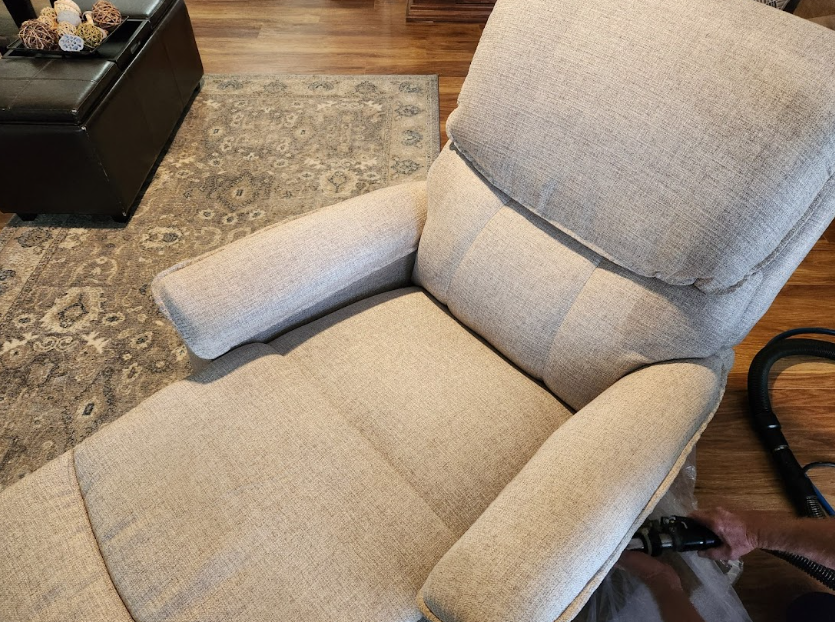
When someone in the home has been sick, especially with something contagious like a stomach virus, flu, or respiratory infection, bacteria and viral particles can linger on soft surfaces long after symptoms clear up. Carpet, upholstery, and rugs in bedrooms, bathrooms, and common areas are all reasonable candidates for a sanitizing pass in this situation. This is also one of the areas where indoor air quality and surface hygiene start to overlap, since a household recovering from illness benefits from every surface getting genuine attention, not just the ones that get wiped down daily with disinfecting spray.
New Pets in the Home
A new puppy or kitten adjusting to a home almost always means accidents before house training is complete, along with tracked-in outdoor bacteria from walks and yard time. Standard cleaning removes the stain and the odor source in most cases, but a sanitizing step addresses the bacteria left behind at the site of an accident, which matters for households with young kids crawling on the same floors. It’s a small addition with a clear, practical reason behind it during that adjustment period, and most pet owners find it worth building into the first few months after a new animal joins the family.
Allergies, Asthma, and Sensitive Immune Systems
Households managing allergies, asthma symptoms, or a family member with a compromised immune system often benefit from sanitizing as part of a broader indoor air quality strategy.
While sanitizing doesn’t replace allergen removal through vacuuming and extraction, reducing the bacterial and fungal load in carpet and upholstery can meaningfully cut down on one more source of irritation in a home that’s already working hard to manage sensitivities. This is particularly relevant in humid climates, where fungal growth in damp padding has more opportunity to take hold between cleanings than it would somewhere drier.
Move-In and Move-Out Cleanings
Move-in cleanings are a common blind spot. A new homeowner or renter has no idea what the previous occupants’ cleaning habits looked like, whether pets lived there, or whether anyone in the home was sick before moving out. Starting fresh with a sanitizing treatment alongside the initial cleaning gives new occupants a genuinely clean baseline rather than an assumed one. To learn more, read our blog about why carpet cleaning could save a security deposit before moving out: Moving Out Soon? Why Carpet Cleaning Could Save Your Security Deposit
How Professional Carpet Sanitizing Works
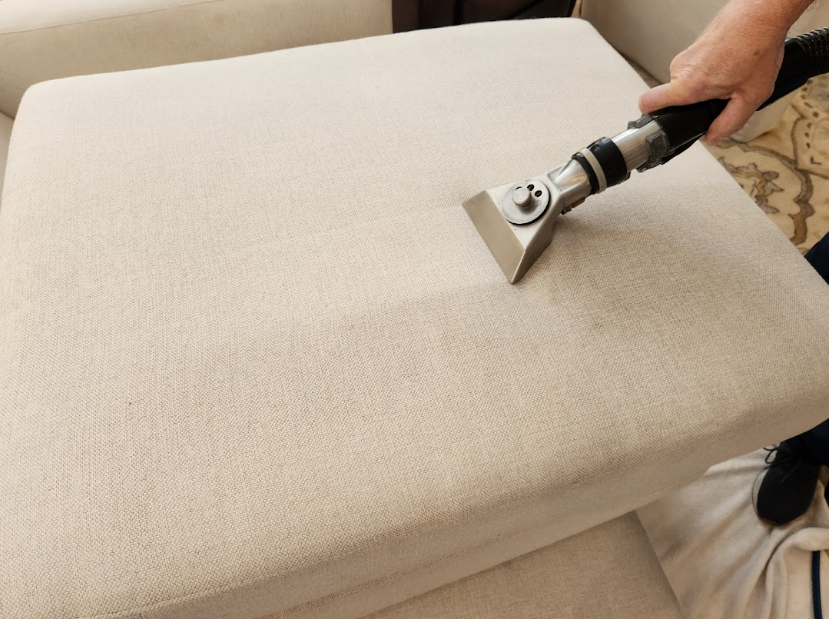
A proper sanitizing appointment follows a specific sequence. The carpet or upholstery is cleaned first, since sanitizing solutions work best on a surface that’s already free of heavy soil buildup that could block full contact with the fiber. Once the initial cleaning and extraction pass is complete, an EPA-registered antimicrobial solution is applied and given the manufacturer-specified dwell time to work, which is often several minutes rather than a quick pass-through.
Technicians trained to this standard follow that dwell time closely, since cutting it short undermines the entire point of the treatment and leaves the household paying for a step that never had the chance to actually work.
This is one of the reasons hiring a properly trained crew matters as much as the solution itself. To learn more, read our blog about what IICRC certification means and why it should matter: IICRC Certification: What It Means and Why It Should Matter to You
Solution choice matters too, particularly for households with kids, pets, or anyone sensitive to strong chemical residue. Effective antimicrobial solutions don’t have to mean harsh fumes or a heavy chemical smell left behind in the home, and the two qualities are not mutually exclusive despite what a lot of older cleaning products would suggest.
How Often Sanitizing Should Be Part of the Routine
For most households, sanitizing isn’t a fixed recurring line item the way a regular cleaning schedule is. It’s tied to events rather than a calendar: an illness passing through the house, a new pet’s first several months, a seasonal allergy flare-up, or a move-in appointment. Once the situation that prompted it has resolved, most homes can return to a standard cleaning schedule without needing sanitizing built into every future visit.
The exception is households with an ongoing reason to keep it in rotation, such as a family member with a chronic respiratory condition or a home with multiple pets that never fully stops needing that extra layer of attention. In those cases, it’s worth discussing with a provider whether sanitizing should simply become a standing part of every appointment rather than something requested case by case.
Cleaning and Sanitizing Together: Building the Right Routine
The most practical approach is treating cleaning as the maintenance baseline and sanitizing as the targeted response to a specific situation. A household with no particular health concern can stick to a regular cleaning schedule built around foot traffic, pets, and seasonal soil. The moment illness, a new pet, allergy flare-ups, or a move-in situation enters the picture, adding a sanitizing step to that same appointment is a small addition that addresses a real gap standard cleaning leaves open.
Pet owners in particular tend to notice this gap the hard way, especially when odor keeps returning after a cleaning that should have solved the problem. To learn more, read our blog about why pet odors keep coming back after DIY carpet cleaning: Why Pet Odors Keep Coming Back After DIY Carpet Cleaning
And for households dealing with allergy symptoms that seem to trace back to more than just the carpet, it’s worth looking at what’s happening in less obvious places too, like a mattress that hasn’t been professionally cleaned in years. Households booking an upholstery cleaning in St. Petersburg, FL appointment for fabric furniture often find the same allergens hiding in a mattress that has gone years without professional attention.
To learn more, read our blog about why a mattress needs professional cleaning more than most people think: Why Your Mattress Needs Professional Cleaning More Than You Think
Asking a provider directly whether sanitizing is included, or whether it needs to be booked separately, is the simplest way to make sure a home is getting the right service for its actual situation rather than assuming one appointment automatically covers both jobs. A quick conversation before booking saves the guesswork later, and any reputable provider should be able to explain exactly what each step in the appointment does and does not accomplish.
What to Ask Before Booking a Sanitizing Appointment
A short list of questions goes a long way toward making sure a sanitizing add-on is worth paying for. It’s reasonable to ask whether the solution being used is EPA-registered specifically for the surface it’s going on, since not every product on a technician’s truck is formulated the same way for carpet versus upholstery versus tile grout. It’s also worth asking how long the dwell time is and whether the crew actually builds that time into the appointment, rather than treating it as a quick spray that gets wiped away during the next step.
Homeowners should feel comfortable asking what the sanitizing step is specifically targeting in their situation, whether that’s bacteria from a pet accident, viral particles following an illness, or general fungal risk in a humid home. A provider who can answer clearly and specifically, rather than giving a vague answer about “extra clean,” is generally one who understands the difference between cleaning and sanitizing well enough to apply it correctly. That clarity is worth as much as the treatment itself, since it’s the difference between paying for a real service and paying for a marketing add-on that sounds good but doesn’t change much.
Book A Combined Cleaning and Sanitizing Appointment with Steambrite Cleaning Services Today
At Steambrite Cleaning Services, a spotless-looking carpet doesn’t always mean germ-free, so we treat cleaning and sanitizing as two separate jobs done right.
We add a dedicated carpet sanitizing service whenever illness, a new pet, or allergies call for it, using EPA-registered solutions that reach deep into padding and grout lines a vacuum never touches, including furniture cleaning and tile and grout cleaning in Florida. We proudly serve Odessa, Palm Harbor, Clearwater, Oldsmar, New Port Richey, St. Pete, St. Petersburg, and Westchase, FL with carpet cleaning, rug cleaning, tile and grout cleaning, furniture cleaning, and upholstery cleaning.
Contact us today to schedule your appointment.
