


Leather furniture is more than just a place to sit; it is an investment in style, comfort, and durability. Whether you own a sleek protected leather sectional or a butter-soft aniline armchair, leather brings an air of sophistication to any room. However, unlike fabric upholstery, leather is a natural material—essentially a skin—that requires specific maintenance to stay supple. Without regular leather furniture cleaning, the natural oils within the hide evaporate, leading to stiffness, fading, and eventually, unsightly cracks.
In this guide, we will explore the professional secrets to maintaining your investment. We’ll cover why leather behaves the way it does, the step-by-step process of restoration, and why residents looking for furniture cleaning in Clearwater trust the experts to handle their most delicate pieces.
The Anatomy of Leather: Why It Needs Specialized Care
To understand the importance of leather furniture cleaning, one must understand what leather actually is. During the tanning process, animal hides are treated to prevent decay and are infused with oils and waxes to remain flexible. Over time, environmental factors begin to strip these essential elements away.
- UV Exposure: Sunlight acts as a drying agent, bleaching the color and making the fibers brittle.
- Body Oils and Salts: While leather needs oil, the sweat and oils from human skin and hair can actually be acidic. Over months of use, these oils break down the protective finish of the leather.
- Dust and Grit: Microscopic dust particles act like sandpaper. Every time you sit down, these particles rub against the pores of the leather, causing premature wear.
For those living in Florida, the humidity and salt air can also play a role in how leather ages. This is why professional sofa cleaning in Clearwater is so popular; the local climate demands a proactive approach to upholstery maintenance.
The Dangers of DIY Leather Cleaning
Many homeowners attempt to clean their leather using “life hacks” found online, such as using dish soap, vinegar, or even hairspray to remove ink. These are often disastrous. Leather has a specific pH balance. Using alkaline cleaners like dish soap can strip the “fat liquors” (the internal oils) from the hide, causing it to dry out instantly.
Furthermore, many “all-in-one” store-bought conditioners contain silicone or paraffin waxes. While these create a temporary shine, they seal the pores of the leather, preventing it from “breathing.” Eventually, this buildup creates a sticky surface that attracts more dirt. Professional leather furniture cleaning avoids these pitfalls by using pH-neutral, water-based cleaners designed specifically for upholstery-grade hides.
Step 1: Deep Soil Extraction and Dusting
The first phase of any professional cleaning process is the removal of dry soil. We use soft-bristled brushes and high-filtration vacuums to clear the crevices and the grain of the leather. If you apply a liquid cleaner to a dusty couch, you essentially create a “mud” that gets pushed deeper into the texture of the leather.
When we perform furniture cleaning in Clearwater, we pay special attention to the welting (the piping) and the areas between cushions where grit tends to hide. By removing this abrasive debris first, we ensure that the subsequent cleaning steps are both safe and effective.
Step 2: Gentle Agitation and Cleaning
Once the dry soil is gone, we apply a specialized leather cleanser. This isn’t a “spray and wipe” situation. A professional technician uses a soft sponge or a horsehair brush to gently agitate the cleaner into the grain. This suspension process lifts embedded body oils, atmospheric soils, and denim dye transfer to the surface.
This stage is critical for maintaining the health of the hide. In high-use households, sofa cleaning in Clearwater often reveals a significant amount of hidden dirt that standard wiping simply cannot reach. By emulsifying these contaminants, we can wipe them away safely, leaving the leather’s surface pristine and ready for the most important step: conditioning.
Step 3: pH Balancing and Rinsing
After the dirt is lifted, it is essential to ensure no cleaning agent remains on the leather. We use a pH-balancing rinse that neutralizes the surface. This ensures the leather remains at its natural, slightly acidic state (usually between 4.5 and 5.0 pH). If the leather is left too alkaline, it will feel stiff; if it is too acidic, the fibers can weaken. This level of precision is why professional leather furniture cleaning is far superior to home methods.
Step 4: Rehydration and Conditioning
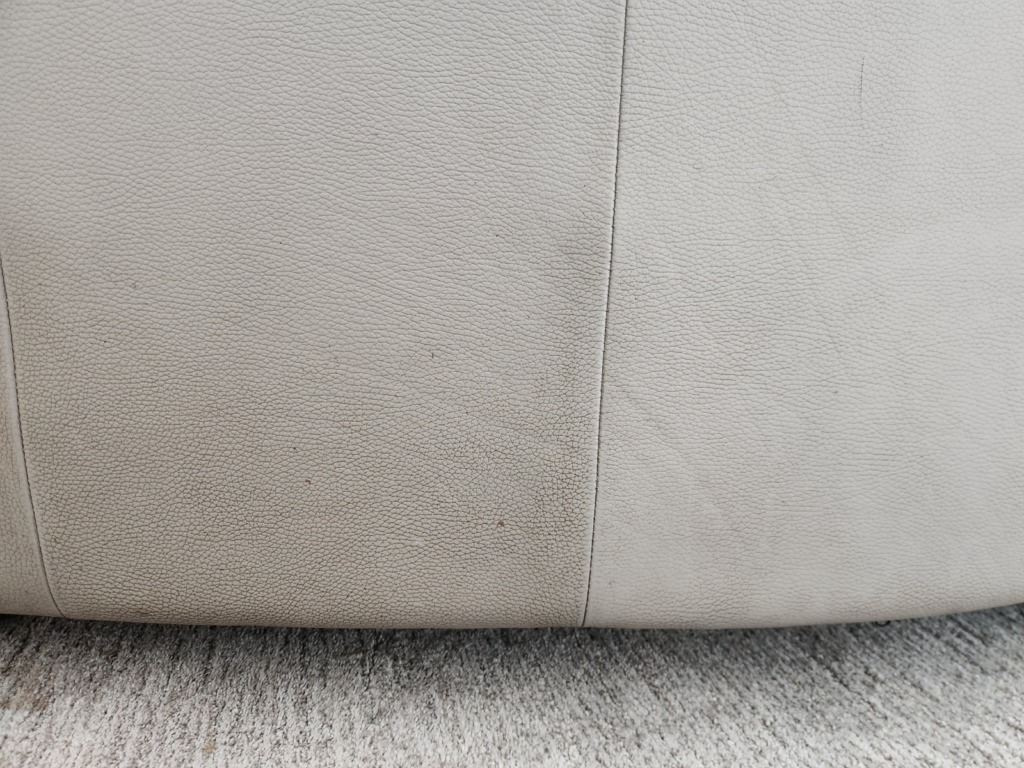
If cleaning is like washing your face, conditioning is like applying a high-end moisturizer. This is where the magic happens. A professional leather conditioner contains a blend of natural oils and fats that can actually penetrate the surface pores.
As the conditioner is massaged into the hide, it restores the “hand” (the softness) of the furniture. This process:
- Prevents Cracking: By keeping the fibers lubricated, they can slide over one another when you sit down rather than snapping.
- Restores Luster: It brings back the soft, matte, or satin glow that new leather possesses.
- Enhances Scent: High-quality conditioners often replenish that unmistakable “new leather” aroma.
For residents who invest in high-end pieces, regular furniture cleaning in Clearwater ensures that the leather remains supple enough to last for decades rather than just a few years.
Step 5: Protection and Buffing
The final step in our process is the application of a breathable protector. This creates a microscopic barrier that helps repel water-based and oil-based spills. It doesn’t make the leather “plastic-y,” but it gives you a crucial window of time to wipe up a spill before it becomes a permanent stain. Once the protector has set, we hand-buff the entire piece with a microfiber cloth to ensure an even finish and a beautiful, natural look.
How Often Should You Clean Your Leather?
Most manufacturers recommend a professional cleaning and conditioning every 6 to 12 months. However, this depends on usage. If your sofa is in a sunlit room or if you have pets that enjoy lounging on the furniture, you may need service more frequently.
Neglecting your leather for years often leads to “dry rot” or deep cracking that cannot be reversed—only repaired with fillers and dyes. Preventative sofa cleaning in Clearwater is significantly more cost-effective than having to reupholster or replace a premium leather set.
The Steambrite Difference
When you choose us for your leather furniture cleaning, you aren’t just getting a wipe-down. You are getting a full restorative treatment that adds years to the life of your furniture. We take pride in being the top choice for furniture cleaning in Clearwater, providing a level of detail that “general” cleaners simply can’t match.
Is your leather looking tired or feeling stiff? Don’t wait for cracks to appear. Let the experts at Steambrite Cleaning Services restore your furniture to its former glory. Reach out to us today.
