


Vinyl flooring is popular because it’s practical. It handles busy households, it looks modern, and it’s easy to maintain—at least in theory. In real life, vinyl often starts looking dull long before it’s actually worn out. You might notice cloudy streaks, dark traffic lanes, or a dingy film that never seems to go away, even after you mop.
That’s usually not “damage.” It’s a buildup. When we’re scheduled for floor cleaning in Madeira Beach, FL, we see the same pattern over and over: vinyl that still has plenty of life left, but needs the right kind of deep clean to remove residue and embedded grime.
Why Vinyl Starts Looking Worn Before It’s Actually Worn Out
Vinyl floors can look tired for a few reasons that have nothing to do with permanent damage. Understanding the cause helps you choose the right fix.
Residue film is the most common culprit
Many vinyl floors develop a haze because of residue—either from cleaner buildup, too much product, or mopping methods that spread soil around instead of removing it. This film dulls the surface and makes the floor seem “always dirty.”
Embedded grit creates dull traffic lanes
Fine sand and dust get tracked in and grind into the surface texture. Over time, it creates a dull path where you walk the most. This isn’t always scratching—it’s often grime embedded in the texture and sitting on top of the finish.
Scuffs and scratches: setting realistic expectations
Scuffs are usually transfer marks (from shoes, rubber, or furniture). Many scuffs improve a lot with proper cleaning. Scratches are different: they’re physical wear. Professional cleaning can make vinyl look dramatically better, but we don’t claim we can remove all scratches. What we can do is remove the dirt and film that makes scratches look worse than they really are.
The Wrong Way to Clean Vinyl (and Why It Backfires)
Vinyl is resilient, but it doesn’t respond well to every cleaning habit people assume is “safe.”
Too much soap creates a dirt-attracting layer
One of the biggest problems is using too much cleaner. The floor may look shiny right after, but when the residue dries, it attracts soil faster and creates streaks that never fully disappear.
Over-wetting spreads grime
Flooding the floor doesn’t make it cleaner. It can push dirty water into seams (especially on plank vinyl) and can leave behind a cloudy finish if the solution isn’t fully removed.
Abrasive scrubbing can dull the surface
Harsh pads or aggressive brushes can scuff the vinyl’s wear layer. Once that layer is dulled, the floor can look hazy even after cleaning.
Our Vinyl-Safe Cleaning Process: Solution + Steam Surface Cleaning
Vinyl responds best to a balanced approach: the right vinyl-safe solution to break up film and grime, followed by a rinse-and-remove step that lifts the dirt off the floor instead of leaving it behind.
Step 1: We choose a cleaning solution designed for vinyl
Not every cleaner is compatible with vinyl’s wear layer. We use a solution designed for vinyl flooring to help loosen residue and embedded soil without damaging the surface.
Step 2: We apply the solution across the floor
We spray the cleaning solution across the entire vinyl floor, focusing on traffic lanes and areas where film has built up. This creates the “release” step—softening the buildup so it can be removed cleanly.
Step 3: Steam surface cleaning removes grime and the cleaning solution
After the solution has done its job, our tile and grout cleaners steam clean with a surface cleaner to lift and remove the loosened dirt and solution. This matters because vinyl often looks streaky when product and dirty water are left behind. Proper removal is what brings back that clearer, more even appearance.
If you’re also maintaining tile areas in the same home, our surface-cleaning approach pairs well with the methods we use for tile, too. You can see the service here: Tile and Grout Cleaning Services.
When We Recommend a Rotary Scrubber (and Why It Helps)
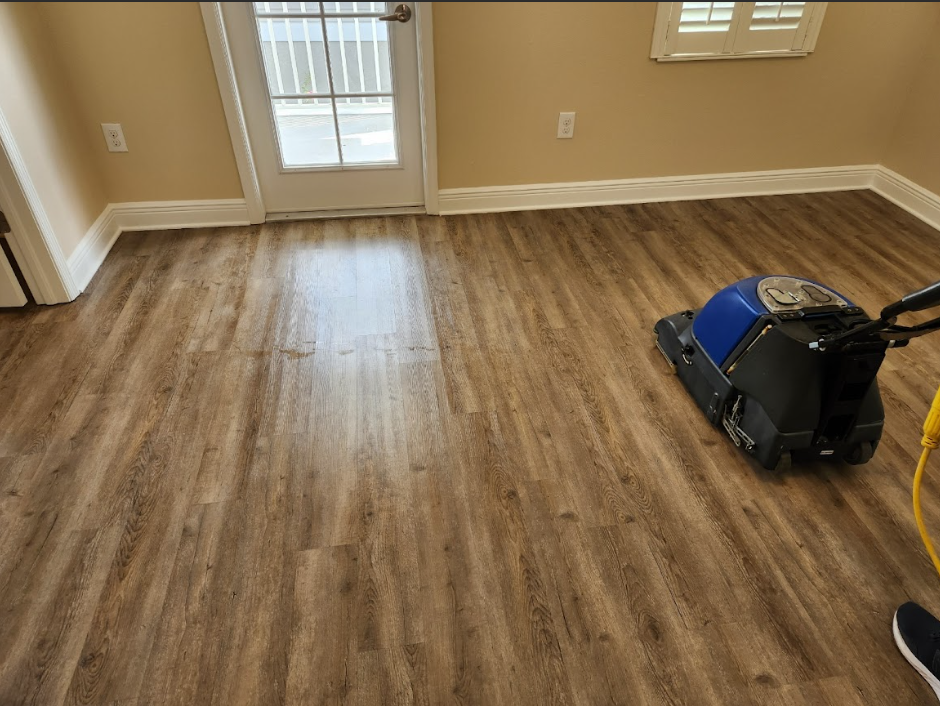
Some vinyl floors have more than just a light film. In busy homes, rentals, or commercial spaces, you may be dealing with heavy soil that has been building for a long time. In those cases, we may recommend a rotary scrubber.
Heavily soiled vinyl needs deeper agitation
Rotary scrubbing helps break up stubborn grime that’s pressed into texture, grooves, or traffic lanes. It’s not about being aggressive—it’s about using the right tool to lift what regular mopping can’t.
Restoring a uniform look without over-wetting
A rotary scrubber, used correctly, provides effective agitation while still keeping moisture controlled. We’re not soaking the floor; we’re loosening the soil so it can be removed properly during surface cleaning.
Ideal scenarios for rotary scrubbing
- Long-neglected floors with dark lanes
- Rentals or move-in/move-out cleaning
- Kitchens where grease and residue accumulate
- Commercial vinyl with constant foot traffic
If you’re not sure what your vinyl needs, our team can advise based on the floor’s condition and use. You can also confirm service coverage in your area here: Locations.
And for homeowners balancing multiple surfaces, we often see people schedule vinyl and tile together—especially when they already have a visit booked for something like tile and grout cleaning in West Chase, FL, and want the whole home’s floors to match in cleanliness and appearance.
What You Can Expect After a Professional Vinyl Clean
A proper vinyl cleaning often surprises people. That’s because it removes the “invisible layer” that makes vinyl look permanently dull.
You’ll typically notice:
- A clearer, brighter look (less haze and film)
- More uniform color across traffic lanes
- Reduced streaking and cloudy patches
- A cleaner feel underfoot, especially in kitchens and hallways
What we won’t overpromise:
- We don’t claim we can “erase” every scratch
- We don’t claim to restore worn-through wear layers
- We don’t claim cleaning will change the floor’s original finish type
But if the floor’s main issue is buildup and embedded grime—as it often is—cleaning can make it look significantly newer.
How to Keep Vinyl Looking Better Between Deep Cleanings
Vinyl stays cleaner longer when you prevent grit and residue from building up again.
Use mats at entry points
Fine sand is one of the biggest reasons vinyl looks dull. Entry mats reduce what gets tracked onto the floor and help protect the wear layer.
Clean frequently, but lightly
A microfiber dust mop or vacuum with a hard-floor attachment does a lot of the heavy lifting. This reduces abrasive grit before it gets pressed into the surface.
Avoid heavy soap and “shine enhancers”
Many “high gloss” products leave behind residue. If you want vinyl to look consistently clean, it’s better to use minimal product and avoid anything that builds a coating on top of the floor.
Spot-clean scuffs quickly
Rubber marks and scuffs are easier to lift when they’re fresh. Leaving them for weeks gives soil time to bond around them, making them harder to remove.
Vinyl Can Look Fresh Again—Without Guesswork
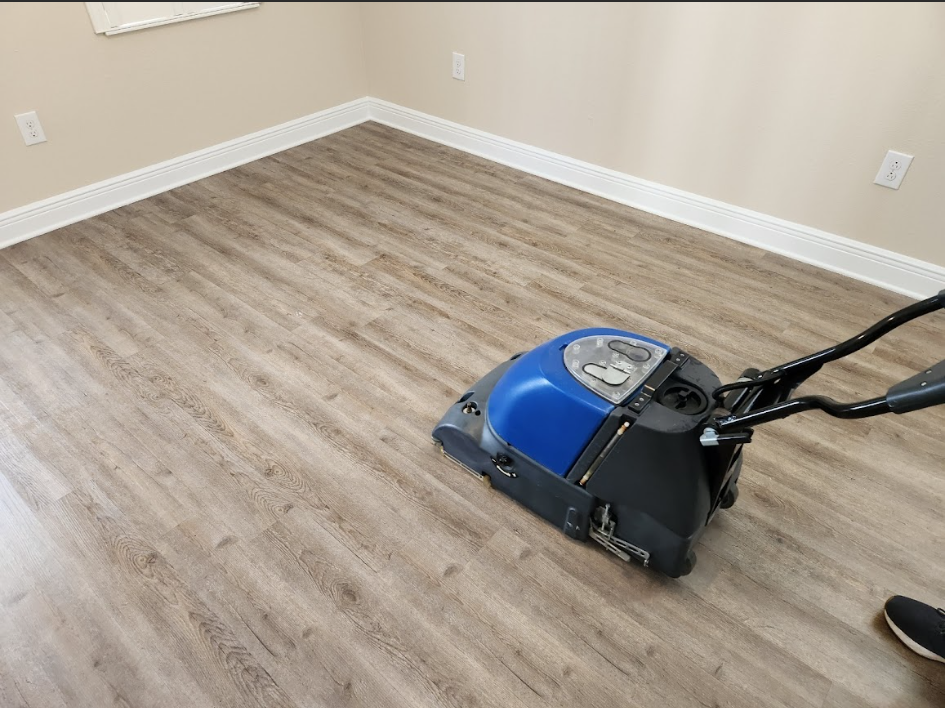
If your LVP or sheet vinyl looks cloudy, streaky, or permanently dull, it usually doesn’t mean the floor is ruined. In many cases, the problem is a combination of residue film and embedded grime—both of which respond extremely well to the right vinyl-safe solution, steam surface cleaning, and (when needed) rotary scrubbing for heavier soil.
If you’re aiming for a full-home reset, we can also help with tile and grout cleaning in Largo, FL, and for homes with mixed surfaces, we often pair vinyl service with tile cleaning in Tarpon Springs to bring back a consistent, cleaner look across every room. For details on how we clean vinyl flooring, visit: Vinyl Cleaning Services.
To schedule your vinyl floor cleaning or ask a quick question about your specific floor type, please reach out here: Contact Steambrite Cleaning Services.
