


Your sofa is one of the most-used pieces of furniture you own. It’s where you relax, watch TV, entertain guests and where the kids and pets curl up. Most of us notice when a sofa looks worn or a cushion loses its shape, but what we don’t see is the dust, dander, body oils and crumbs that settle deep in the fabric and padding over months and years.
This page explains what builds up inside upholstery, how it affects comfort and indoor air, the signs your furniture needs more than a vacuum, and how often to schedule professional cleaning.

What’s Hiding in Your Sofa
Upholstered furniture collects far more than crumbs:
- Dust, pollen and dust-mite waste settle between the fibres and into the padding. See the AAFA’s advice on controlling indoor allergens.
- Pet hair and dander become embedded in the fabric, especially in homes where pets sleep on the furniture.
- Body oils and perspiration gradually leave seating looking dull and smelling stale.
- Food and drink spills leave residue below the surface, even when the spill was wiped up quickly. That residue contributes to odours and discolouration over time.
- Abrasive grit. Dirt particles act like fine sandpaper against fabric fibres, which can wear the fabric down faster.
A sofa can look reasonably clean from across the room while still holding months of everyday buildup. The EPA notes that indoor air often contains more pollutants than outdoor air, and fabrics that hold particles are one place they collect.

Why Vacuuming and Spot Cleaning Aren’t Always Enough
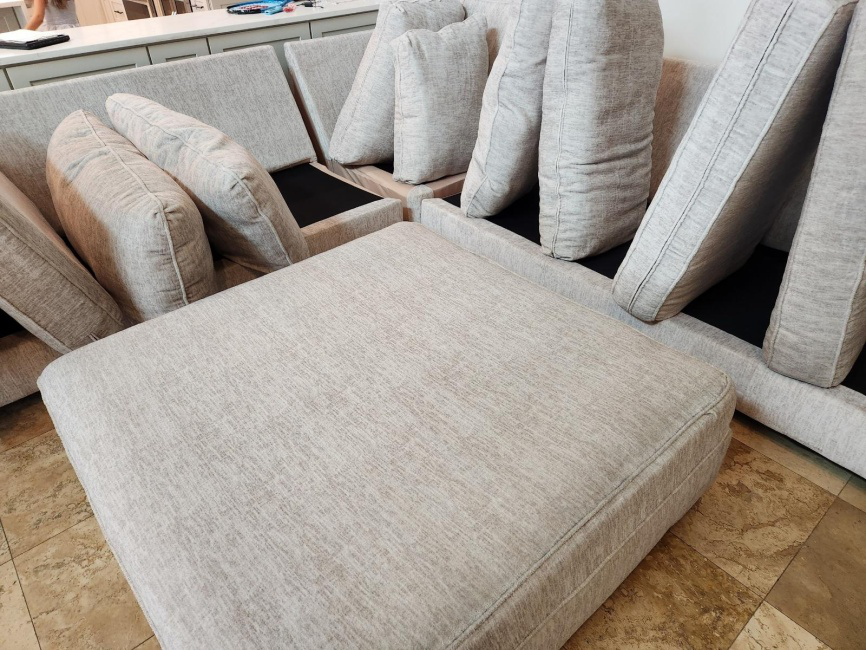
Regular vacuuming matters. It removes loose dirt before it works deeper into the fabric. But upholstery has seams, cushion edges and textured weaves that household tools can’t fully reach, and a multi-piece sectional has even more surface area for debris to collect.
Spot cleaning has its place for fresh spills, but neither method gives heavily used upholstery the deeper clean it eventually needs. DIY cleaning can also create problems of its own:
- Too much water can leave upholstery damp for too long.
- The wrong cleaning product can leave residue or affect certain fabrics.
- Aggressive scrubbing can damage delicate fibres or spread a stain.
Fabrics differ, so the method should match the material. If you’re unsure, check the furniture’s care label before you clean anything.
Dirty Upholstery and Indoor Comfort
Dust and other particles in upholstered furniture add to the settled and airborne particles inside a home. For people who are sensitive to dust mites or pet dander, keeping frequently used fabric surfaces clean can be part of managing their indoor environment, alongside other steps such as regular vacuuming and good ventilation. The American Lung Association has a useful overview of indoor air pollutants.
Cleaning alone won’t cure allergies or asthma, but removing accumulated dust, hair and residue from the furniture you sit on every day is a reasonable step, especially for households with children, older adults or anyone sensitive to allergens.
What Happens When Upholstery Is Never Cleaned
The longer buildup stays in the fabric, the harder it is to remove:
- Fibres break down faster under abrasive grit.
- Stains that could have been lifted early become set.
- Odours settle in and keep returning.
- Fabric looks flattened, dingy or worn in the most-used seats.
Neglected furniture also costs more in the long run. Regular maintenance helps protect your investment and delays replacement.

Signs Your Furniture Needs a Deep Clean
- Odours that return after you air out the room
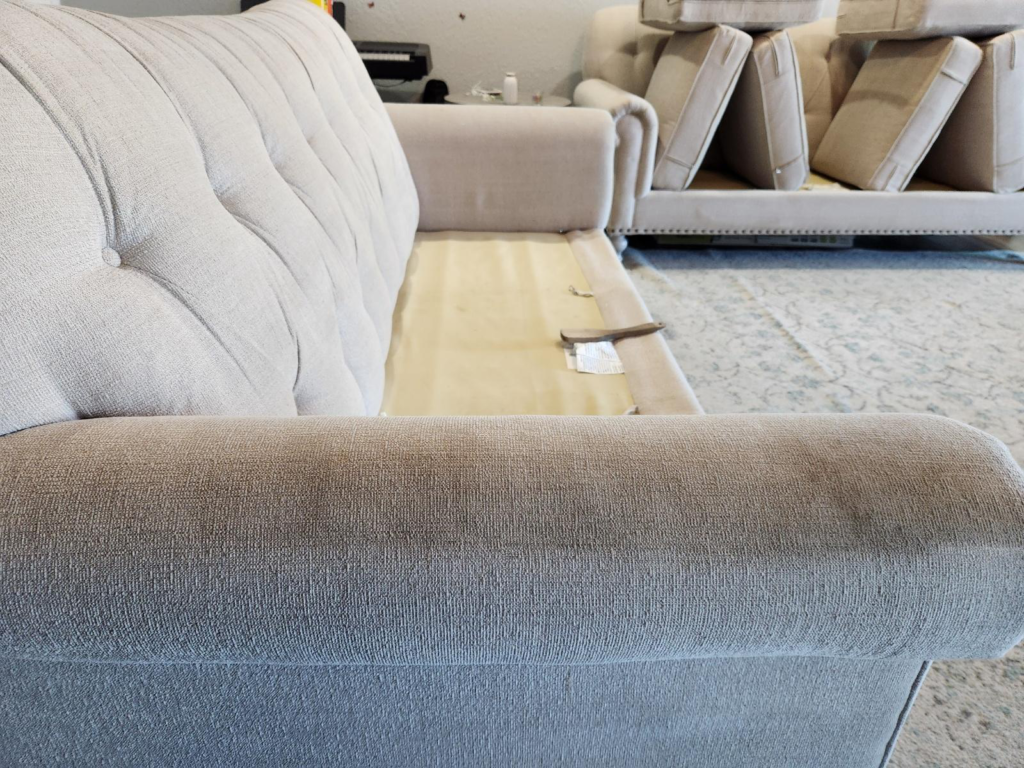
- Visible stains or darker patches where people sit most
- Fabric that looks dull, flat or worn compared with less-used areas
- Noticeable pet hair or dander buildup
- A musty or stale smell
- Heavy use from children, pets or frequent guests
You don’t need to wait until the sofa looks dirty. Dirt, oils and residue build up gradually, and cleaning before the fabric is visibly soiled makes the job easier and protects the material.

How Often Should Upholstery Be Professionally Cleaned?
There’s no universal schedule. It depends on how much the furniture is used, how many people and pets share it, the fabric and whether anyone has allergies.
| Your home | Suggested interval |
|---|---|
| Lightly used furniture, no pets | Every 12 to 24 months |
| Pets, young children, allergy sufferers or heavy daily use | Every 6 to 12 months |
| Visible stains or lingering odours | Sooner, whatever the schedule |
What to Expect From a Professional Visit
- Inspection. The technician identifies the fabric and any stain types, and checks the care label.
- Pre-vacuuming. Loose soil, hair and crumbs are removed first.
- Targeted pre-treatment. Stains and heavily soiled areas are treated with a product suited to the fabric.
- Deep cleaning. A method suited to the material, such as hot-water extraction or low-moisture cleaning, lifts out the loosened soil.
- Finishing. The fabric is groomed and left to dry, with advice on drying time and aftercare.
How to Keep Upholstery Clean Between Visits
- Vacuum regularly and thoroughly. Focus on high-traffic seats, under cushions and along seams. In homes with pets or children, vacuum more often.
- Rotate and fluff cushions so wear is spread evenly and the cushions keep their shape.
- Use washable throws or slipcovers on high-use pieces. They protect against stains, fur and oils and are easy to launder.
- Keep dirt out at the door. Doormats at main entrances and a shoes-off habit reduce the grit that ends up on furniture.
- Deal with spills promptly. Blot, don’t rub, and avoid soaking the fabric.
- Follow the manufacturer’s care label.
Professional cleaning complements this routine rather than replacing it. It deals with what regular upkeep can’t reach.
Coordinate Upholstery With Floor Care
Dust and allergens move between furniture and floors, so cleaning both together helps stop them re-contaminating each other. If you’re booking a visit, consider adding carpet cleaning, tile and grout cleaning or hardwood floor cleaning so the living room and entryway are refreshed in one go.
Where We Serve
Steambrite Cleaning Services provides upholstery and furniture cleaning in Trinity, Tarpon Springs, Palm Harbor, Clearwater, St. Petersburg and nearby areas . See our upholstery cleaning page and our service locations, or learn about our team.
Frequently Asked Questions
Is professional upholstery cleaning worth it?
If your furniture is used daily, shared with pets or children, or has odours and stains vacuuming does not lift, it usually is. It removes buildup that household cleaning cannot reach and helps the fabric last longer.
How often should I have my sofa professionally cleaned?
For lightly used furniture, every 12 to 24 months is a sensible interval. With pets, young children, allergy sufferers or heavy daily use, every 6 to 12 months works better. Visible stains or odours mean it is time sooner.
Does dirty upholstery affect allergies?
Dust, pollen, pet dander and dust-mite waste can collect in upholstered furniture. Keeping it clean is one part of managing a sensitive indoor environment, but cleaning alone will not cure allergies.
Why do odours come back after I air out the room?
Odours settle into the fabric and padding, not just the surface. Air fresheners mask them temporarily, while a deeper clean removes the residue that causes them.
Can I just vacuum and spot clean my sofa?
Both help, and you should keep doing them. But vacuuming mainly removes loose debris, and spot cleaning suits fresh spills. Neither gives heavily used furniture a deeper clean.
What happens if I never clean my couch?
Fibres wear faster under abrasive grit, stains become harder to remove, odours return and the fabric looks flat and dingy. Regular maintenance helps protect your investment.
What does a professional upholstery cleaning visit include?
Inspection and fabric identification, pre-vacuuming, targeted pre-treatment, deep cleaning with a method suited to the material, and finishing with advice on drying and aftercare.
