


Wood floors add warmth and lasting value to a home. Over time, though, even beautiful hardwood can lose its glow. Dirt builds up, foot traffic wears the finish, and residue from the wrong cleaning products leaves a dull film. If your floors no longer shine the way they used to, replacement is rarely the answer. Often, a proper deep clean is.
This guide explains why wood floors dull, what a professional clean involves, what results to expect, how often to schedule it and which daily habits protect your floors in between. It applies to solid hardwood and engineered wood. For laminate, see our engineered and laminate floor guide.
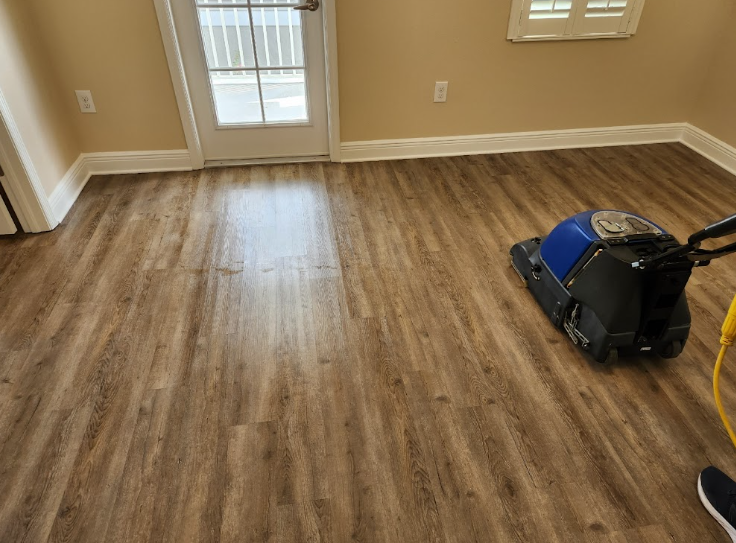
Why Wood Floors Lose Their Shine
Wood floors are built to last, but daily life wears on them. A dull or cloudy look usually comes from a mix of:
- Dirt and grit tracked in from outside
- Foot traffic that presses debris into the surface
- Cleaner residue that leaves a film
- Spills that dry into sticky patches
- Fine scratches that trap dust and grime
Sweeping and mopping can’t fully remove this buildup, and some cleaning methods make it worse. Floors may look clean right after mopping, then dull again quickly as the residue collects more dust.
The Hidden Damage of Embedded Dirt
Sand and fine grit act like sandpaper. With every step they grind against the finish, causing micro-scratches, loss of shine, discolouration in high-traffic lanes and, over time, wear that reaches the protective layer. High-traffic areas such as entryways, kitchens and living rooms usually show it first. Entry mats and daily sweeping stop much of this before it starts.
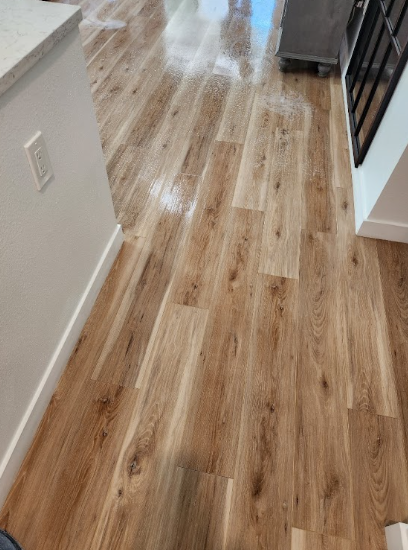
Why Water, Vinegar and Steam Are Risky for Wood
Many homeowners believe frequent wet mopping is enough. In fact, the common home methods cause some of the worst damage:
- Excess water. It seeps between planks and can stay trapped underneath, leading to warping, discolouration and gaps between boards.
- Vinegar. It is often recommended online, but its acidity can dull the finish over time.
- Ammonia and harsh chemicals. They can strip the finish and leave a hazy residue.
- Abrasive tools. Steel wool, stiff brushes and abrasive pads scratch the surface.
- Steam mops. Heat and moisture can force water into seams. Wood floors should not be steamed unless the flooring manufacturer says it is allowed.
What Professional Wood Floor Cleaning Involves
Professional cleaning is built around two ideas: clean deeply, and keep moisture to a minimum. It is designed for hardwood and engineered wood, so it removes embedded dirt without damaging the finish. It is not a steam clean and it is not sanding.
- Inspection. We identify the type of wood flooring, the condition of the finish, the level of buildup and the high-traffic areas, so the approach suits your floor.
- Dry soil removal. Loose dirt and grit are removed before any moisture is applied. This stops grit from scratching the floor during cleaning.
- Specialised cleaning solution. We use a pH-balanced cleaner made for wood. It breaks down dirt and oils and helps lift residue left by earlier cleaning products.
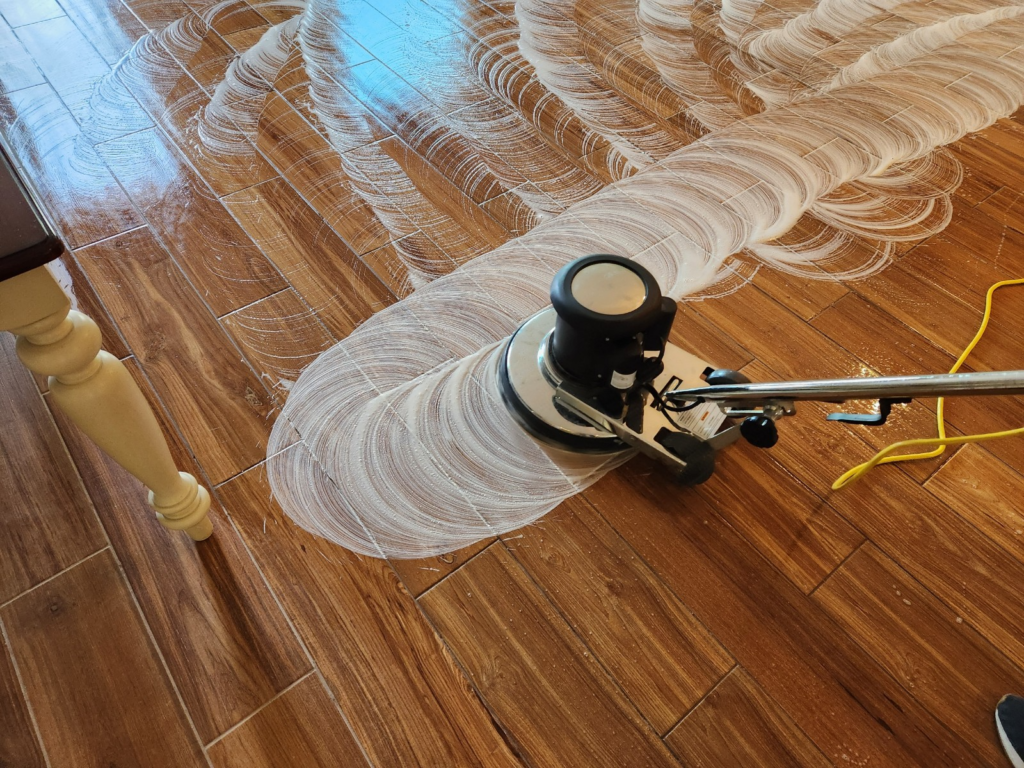
- Gentle agitation. Specialised equipment lifts embedded dirt from the grain and the small gaps between boards.
- Controlled-moisture extraction. A controlled amount of solution is applied rather than soaking the floor. Loosened dirt is then removed, along with the solution, so the floor is left far drier than after conventional mopping.
- Buffing. The floor is buffed to bring back its natural glow. In some cases a protective finish may be recommended.

What Results to Expect
Professional cleaning restores appearance without sanding or refinishing. After a deep clean you can usually expect:
- Richer, more even wood tones
- A smooth, clean surface with no sticky film
- A reduced look of scratches, because settled dirt is removed from around them
- A natural shine that lasts longer between cleans
Cleaning has limits. It will not repair deep scratches, dents or water damage, and it does not replace refinishing when the finish is worn through. What it does is remove the grime that makes wear look worse than it is, and regular maintenance can help delay more expensive restoration.
How Often Should Wood Floors Be Professionally Cleaned?
| Household | Typical schedule |
|---|---|
| Low-traffic home | About every 12 months |
| Moderate traffic | Every 6 to 12 months |
| High traffic, children or pets | Every 3 to 6 months |
Homes with children, pets or heavy foot traffic build up dirt faster, especially in entryways, kitchens and living areas. A professional clean is a reset; your daily habits decide how long it lasts.
Daily and Weekly Care Between Professional Visits
| Do | Don’t |
|---|---|
| Sweep daily with a soft-bristle broom or microfiber dust mop | Use a vacuum with a beater bar, which can scratch the finish |
| Vacuum weekly with a hard-floor attachment | Let water or spills sit on the floor |
| Wipe spills straight away with a slightly damp cloth, then dry | Soak-mop, steam or flood the floor |
| Use a pH-neutral cleaner made for wood and approved by your flooring manufacturer | Use vinegar, ammonia, steel wool or abrasive pads |
| Put mats at entrances and rugs in high-traffic areas | Drag heavy furniture across the floor |
| Fit felt pads under furniture legs | Wear heels or let pet nails grow long |
Protect Your Floors from Humidity Swings
Wood is a natural material that expands and contracts as temperature and humidity change. Keeping indoor humidity steady, roughly between 30% and 50%, helps prevent swelling, gaps and warping. Run a dehumidifier or air conditioning in humid months and a humidifier in dry ones if needed. If you also have carpet, our carpet cleaning visit can cover both in one trip.
Signs It’s Time for a Professional Clean
- Floors look dull or cloudy even after mopping
- A sticky residue remains after cleaning
- Visible dirt sits in the grain lines or between boards
- High-traffic lanes look worn
- The shine fades quickly after you clean
These signs mean buildup has gone beyond what routine cleaning can handle. When you see them, a deep clean is usually the right next step before considering refinishing.
Quick Reference: Hardwood Maintenance Basics

Where We Serve
Steambrite Cleaning Services provides wood floor cleaning in Trinity, Palm Harbor, Tarpon Springs, Clearwater, West Chase, Largo, Odessa, St. Petersburg and nearby areas . See our hardwood floor cleaning page, our service locations and our Clearwater services.
We also clean tile and grout, carpet and vinyl floors, so you can combine services in one visit.
Frequently Asked Questions
Is professional wood floor cleaning worth it?
If your floors look dull, feel sticky or show dirt in the grain, it usually is. Professional cleaning removes buildup that mopping leaves behind and restores shine without sanding.
Does professional cleaning replace refinishing?
No. Cleaning removes dirt and residue and can make wear look less obvious, but it will not repair deep scratches or a finish that is worn through. It can help you maintain floors between refinishing cycles.
How often should wood floors be professionally cleaned?
As a guide: about every 12 months in a low-traffic home, every 6 to 12 months with moderate traffic, and every 3 to 6 months with children, pets or heavy traffic.
Can I use vinegar and water on hardwood?
We advise against it. Vinegar is acidic and can dull the finish over time, and extra water can seep into seams. Use a pH-neutral cleaner made for wood and approved by your flooring manufacturer.
Is it safe to steam clean wood floors?
Not unless the flooring manufacturer specifically allows it. Heat and moisture can enter the seams. Professional wood floor cleaning uses controlled moisture instead.
How do I protect my wood floors from scratches?
Sweep daily, put mats at entrances, fit felt pads under furniture, keep pet nails trimmed and lift furniture rather than dragging it.
Does this apply to engineered wood?
Yes, the same careful, low-moisture approach applies. See our guide to engineered and laminate floors for the details.
