


Stone tile floors make a bold, beautiful statement. Whether you’ve chosen slate, travertine, marble or limestone, these natural surfaces offer elegance and durability. But over time even the most luxurious stone starts to lose its lustre. If yours isn’t gleaming like it used to, you’re not alone: many Clearwater homeowners are dealing with the same thing.
The cause isn’t just dirt. Etching, mineral buildup and poor cleaning habits all play a part. This guide explains what’s dulling your stone, why mopping won’t fix it, and how professional stone tile cleaning in Clearwater restores it safely.
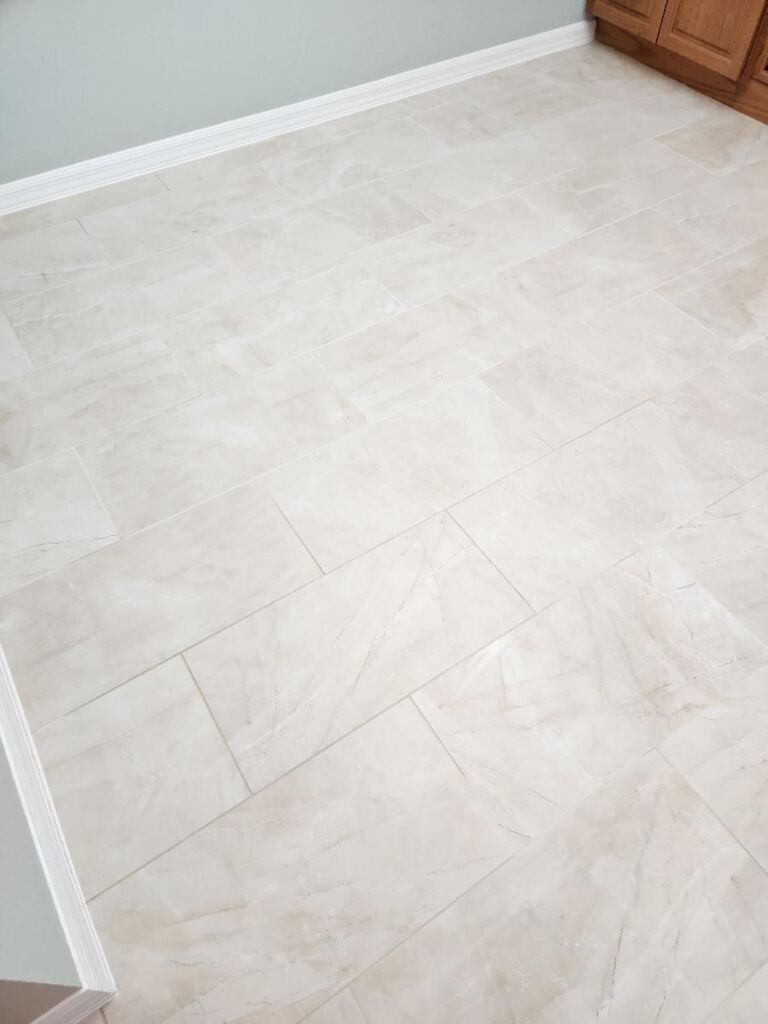
The Hidden Enemies of Stone Tile
1. Etching from everyday spills
Etching happens when acidic substances such as vinegar, lemon, juice or some cleaning products react with the calcium in natural stone. The reaction dulls the surface and leaves cloudy marks or dull spots that basic cleaning can’t remove. It’s especially common on marble and travertine in kitchens and bathrooms, where spills happen often. Even something as mild as lemon water can etch stone if it isn’t wiped away quickly. Mopping cleans the surface but can’t reverse a chemical reaction.
2. Hard water and mineral buildup
With hard water, calcium and magnesium build up on stone over time, particularly in bathrooms and entryways. These layers form a hazy film that mopping doesn’t remove, and the more you mop, the more the minerals spread. The result dulls the finish and can contribute to staining and discolouration.
3. Embedded grime and soil
Stone is porous, so dirt, oils and spills don’t just sit on top. They seep in. Everyday traffic grinds particles into the surface, leaving floors tired and uneven in colour. Sweeping and mopping can’t reach into the pores to pull the grime out.
Why Mopping Doesn’t Cut It
Mopping only removes surface debris, and it often leaves residue behind, especially with store-bought cleaners that aren’t made for natural stone. Some products make matters worse, adding residue or etching the stone further. If your mop leaves streaks, the floor still looks cloudy, or grout lines are dark no matter how much you scrub, it’s time to call a professional.
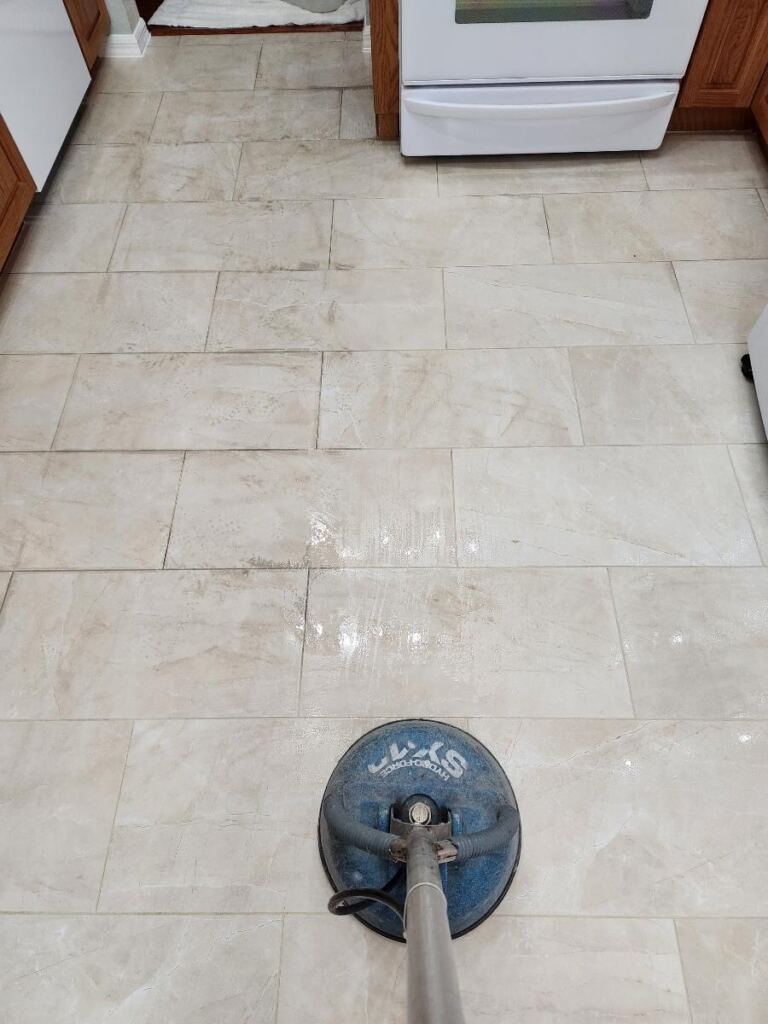
How Professionals Revive Stone Tile
At Steambrite Cleaning Services we use stone-safe, pH-balanced solutions and specialised equipment to restore your stone’s appearance without causing damage .
- Identify the stone. Marble, travertine, limestone and slate don’t all react the same way, so we start by identifying the material and testing the product on a small area.
- Deep extraction of embedded dirt. Our equipment works into the stone’s pores to remove years of embedded grime that household vacuums and mops can’t reach, revealing the true colour and clarity of the tile.
- Safe mineral and residue removal. We use non-acidic treatments designed to break down hard-water deposits without harming the surface.
- Sealing. After cleaning, a quality stone sealer helps protect floors from future stains and wear .
For stone that is already etched, cleaning can remove the soil and film around it, but it can’t undo chemical damage. If you want to talk about restoring a dull or etched area, ask us about the options for your stone .
Between Professional Cleans
- Sweep or dust mop regularly so grit doesn’t scratch the surface.
- Wipe spills quickly. Blot instead of wiping them across the stone.
- Use a pH-neutral cleaner made for natural stone. Avoid vinegar, lemon, bleach, ammonia and abrasive scrubbers.
- Reseal about every one to two years, or sooner if water no longer beads on the surface.
- Schedule a professional clean once or twice a year.
For a full guide to everyday stone care, including how to identify your stone and common mistakes, read our natural stone care guide.

Complete Floor Care in Clearwater
We clean stone, tile and grout, carpet, wool rugs and upholstery in Clearwater, Palm Harbor, Trinity and nearby areas . Many customers bundle services for a full deep-cleaning day. See our Clearwater page or all service locations.

Frequently Asked Questions
Why is my stone tile losing its shine?
The usual causes are etching from acidic spills, hard-water mineral buildup and embedded dirt in the stone’s pores. Residue from the wrong cleaner can add to the dullness.
What is etching and can it be cleaned off?
Etching is a chemical reaction between acids (vinegar, lemon, juice, some cleaners) and the calcium in stone such as marble and travertine. It leaves dull or cloudy marks. Cleaning removes soil around it but can’t reverse the reaction.
Can I use vinegar to clean stone floors?
No. Vinegar and lemon are acidic and can etch marble, travertine and limestone. Use a pH-neutral cleaner made for natural stone.
How do you remove hard-water deposits from stone?
We use non-acidic treatments designed to break down mineral buildup without harming the stone, and we test on a small area first.
Should stone tile be sealed?
Yes, in most cases. Sealer reduces how much liquid and dirt the stone absorbs. Reseal about every one to two years, or when water no longer beads on the surface.
How often should stone tile be professionally cleaned?
Once or twice a year for most homes, depending on traffic and how much moisture the room sees.
