


Life on the Gulf has its perks: sunshine, breezes and beautiful water views. For Madeira Beach homeowners, coastal living also brings salt air, sand, humidity and constant moisture, and all of it works on your tile and grout. The same air that carries that ocean scent is full of salt aerosol, microscopic particles that settle into the pores of grout and unsealed floors.
If you’ve noticed dull tile, discoloured grout, or a bathroom that still feels musty no matter how much you scrub, this guide is for you. It covers how salt and moisture damage grout, why DIY often falls short, and how professional tile and grout cleaning followed by sealing helps protect coastal floors.

The Coastal Challenge: Salt, Humidity and Sand
Salt aerosol is a constant presence in beachfront homes. You can’t see it, but it settles in every crevice, especially porous surfaces like grout and unsealed tile. Grout is naturally porous, and in a coastal climate salt can work into those pores, which gradually weakens grout and invites trouble. Over time you may see:
- Surface dullness on tile
- Grout discolouration
- Mould and mildew, especially where humidity is high and ventilation is poor
- Premature breakdown of grout sealer
- Cracks and crumbling joints that let water in beneath the tile
Bathrooms, showers and beachfront entryways are hit hardest. Many homeowners assume mopping is enough, but the combination of humidity, poor ventilation and salty residue can lead to lasting damage if buildup isn’t removed. That makes regular tile and grout cleaning more than cosmetic; it’s maintenance.
Why DIY Cleaning Isn’t Enough on the Coast
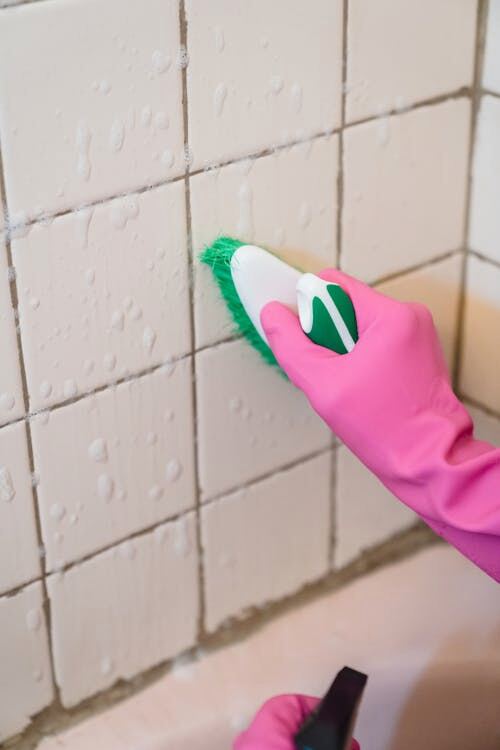
Most household products don’t penetrate deep into grout lines, and over-the-counter sprays tend to clean the surface and leave embedded salt and bacteria behind. Abrasive scrubbing can scratch tile, loosen grout and weaken it, which is especially risky on natural stone. Even regular mopping can push dirt deeper into grout pores.
Salt and humidity also speed up mould and mildew. What looks like simple grime may be embedded soil, and the longer it sits, the harder it is to remove without damaging the tile or grout. The EPA’s healthy home guidance is a useful reminder that moisture control matters.
What a Professional Clean Involves
- Inspection of the tile type, grout condition and problem areas.
- Pre-spray with a solution suited to your floor, left to dwell so it breaks down salt residue, grime and soap film.
- Agitation with brushes made for grout lines, plus a rotary scrubber or a second wash for heavy soil .
- High-temperature steam and extraction to flush out loosened dirt, salt residue and solution without leaving a sticky film. This avoids harsh chemicals that can strip sealer or harm tile.
- Sealing, ideally straight afterwards. See below.

Sealing: Your Best Protection Against Salt
After a deep clean, sealing is the step that keeps results. A good sealer acts like a waterproof jacket for grout: it repels moisture, helps block salt and reduces the risk of future stains. In coastal homes, sealer typically lasts about 12 to 18 months, so reseal every one to two years, and sooner if water no longer beads on the grout. If your grout has never been sealed, or it’s been years, now is the time.
We offer sealing after deep cleaning, and our team can recommend the right product for ceramic, porcelain or natural stone .
Electrostatic barrier sealing
One option we offer is an electrostatic sealant. After a thorough clean, it’s applied as a charged mist that coats surfaces evenly, including hard-to-reach grout lines. It’s designed to penetrate grout pores to repel salt, oil and water, help prevent future staining and mould growth, and make routine maintenance easier because dirt can’t stick as readily. It suits stone, ceramic and porcelain floors in bathrooms, entryways and patios .

Keeping Mould and Mildew Away
Salt exposure weakens grout, but the bigger risk follows it: moisture. Weak grout lets water settle in places you can’t see, which feeds mildew and mould. Deep cleaning removes the soil they live on, and the sealer slows moisture. Ask your technician about options for your bathroom, and keep the room well ventilated so grout can dry between uses.
Floor Types Around the Bathroom
Bathrooms aren’t just tile. Many Madeira Beach homes have waterproof vinyl, sealed laminate or wood-look ceramic nearby, and each needs its own method. We offer care for vinyl and laminate floors, hardwood and natural stone, so adjoining rooms get the right treatment. Salt and sand also travel into carpets and rugs, where steam extraction removes grit a vacuum can’t.
How Often to Clean in a Coastal Home
| Service | Suggested frequency near the coast |
|---|---|
| Tile and grout cleaning | Every 6 to 12 months |
| Grout sealing | Every 12 to 18 months |
| Vinyl and laminate cleaning | About once a year |
| Stone tile cleaning | About once a year |
Pets, children and heavy traffic mean more frequent care. Vacation homes and rentals with fast turnover and inconsistent upkeep benefit most.

Pro Tips Between Cleanings
- Dry mop often to remove loose sand before it embeds in grout.
- Use entryway mats to catch debris before it reaches your tile.
- Keep bathrooms dry with ventilation and a quick towel-down.
- Avoid acidic or abrasive cleaners, including vinegar and bleach, which degrade sealer and grout.
- Mop with a pH-neutral cleaner.
Waterfront and Historic Properties, From Madeira Beach to Tarpon Springs
The same salt-air problems affect older waterfront buildings along the Gulf, including the historic Sponge Docks area of Tarpon Springs. Aging tile and grout there often show cracking, loose tile, darkened lines and musty odours, because salt and moisture have had decades to work. A tailored approach matters: each tile type, whether ceramic, stone or porcelain, needs its own solution, and grout condition depends on the property’s age and past maintenance.
For heavy soil or older floors we may use a rotary scrubber to lift deep-seated dirt, and some clients then choose a penetrating sealer, although options vary by material. Preventive care costs less than repair, for homes and businesses alike. See our Tarpon Springs page for local service details.
Don’t Wait for Damage
Think of tile and grout cleaning as preventive maintenance, not an emergency fix. The longer salt and moisture sit, the worse the damage and the higher the repair bill.
Frequently Asked Questions
How does salt air damage tile and grout?
Salt aerosol settles into porous grout, where it can weaken the material and combine with humidity to cause discolouration, mould and mildew, and breakdown of sealer. Over time grout can crack and let water in beneath the tile.
How often should coastal homes have tile and grout cleaned?
Every 6 to 12 months for homes close to the shoreline or in humid conditions. Pets, children and heavy traffic may mean more often.
How often should grout be sealed near the coast?
Sealer typically lasts about 12 to 18 months in coastal conditions, so plan to reseal every one to two years, and sooner if water no longer beads on the grout.
Can I clean salt-stained grout myself?
Light surface dirt, yes, with a pH-neutral cleaner and a soft brush. But household products rarely reach embedded salt, and abrasive scrubbing can scratch tile or loosen grout.
What is electrostatic sealing?
It is a sealer applied as a charged mist after cleaning so it coats surfaces evenly, including grout lines. It is designed to repel salt, oil and water.
Is professional cleaning safe for natural stone near the coast?
Yes, when the products suit the stone. We identify the tile first and use stone-safe solutions, avoiding acids.
Do you offer this for vacation homes and rentals?
Yes. Fast turnover and inconsistent upkeep can cause damage, so regular cleaning and sealing help protect floors and keep rentals looking cared for.
