


Keeping tile floors spotless is a challenge in Tarpon Springs. Homes and businesses here deal with Florida’s humid climate, waterfront moisture and sand and the occasional saltwater residue tracked indoors. Over time, grime, mould and stubborn stains dull even the best tile. The good news is that you can restore it without replacing the floor.
Steambrite Cleaning Services provides professional tile and grout cleaning across Tarpon Springs. We use steam cleaning, careful agitation and grout sealing to lift out the dirt trapped in grout lines, bring back the colour and protect your floors.
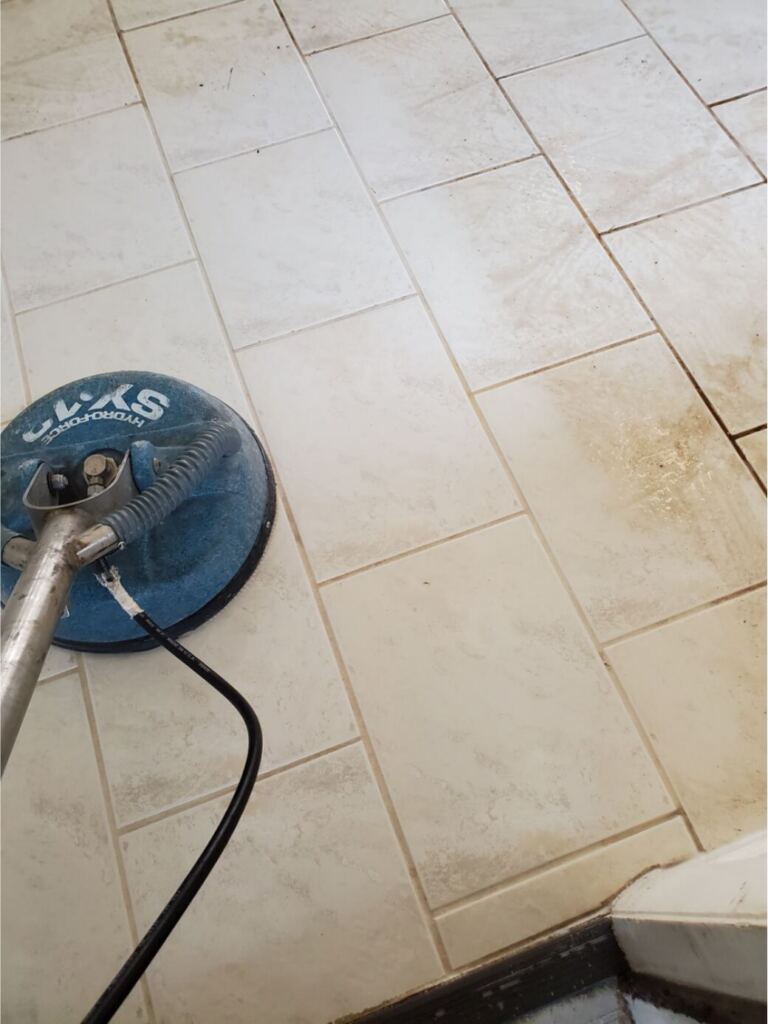
Tile Challenges in Tarpon Springs
Tarpon Springs is known for its scenic waterfront and historic charm, but the environment is tough on tile:
- High humidity. Moisture encourages mould and mildew in grout, especially in bathrooms and kitchens.
- Sand, salt and outdoor dirt. Living near the coast means gritty sand and residue come inside. They scratch tile surfaces and wear down grout. Homes near the beach feel this most.
- Heavy foot traffic. In shops, restaurants and offices, constant traffic grinds dirt into grout lines.
- Hard water. Mineral deposits leave streaks on tile and can discolour grout, especially in showers and bathroom floors.

Why Regular Tile and Grout Cleaning Matters
Hygiene
Grout is porous, so it absorbs moisture, dirt, oils and spills. Left alone, it becomes a place for mould, mildew and bacteria to grow, and it can give off odours. Mould and allergens can be a problem for children, older adults and anyone with asthma or allergies.
Safety
Residue and mould can make floors slippery, which matters in bathrooms, kitchens and business entrances. Neglected grout also weakens over time, and that can lead to loose tiles that shift and become a tripping hazard, or cracked tiles with sharp edges.
Appearance and property value
Dark grout makes even beautiful tile look old. Clean grout makes tile pop. It leaves a strong impression on guests and buyers at home, and on customers at your business.
Longer-lasting floors
Dirt and grit act like sandpaper. Regular professional cleaning removes it before it scratches the tile or breaks down the grout, and it helps you avoid costly repairs or replacement.
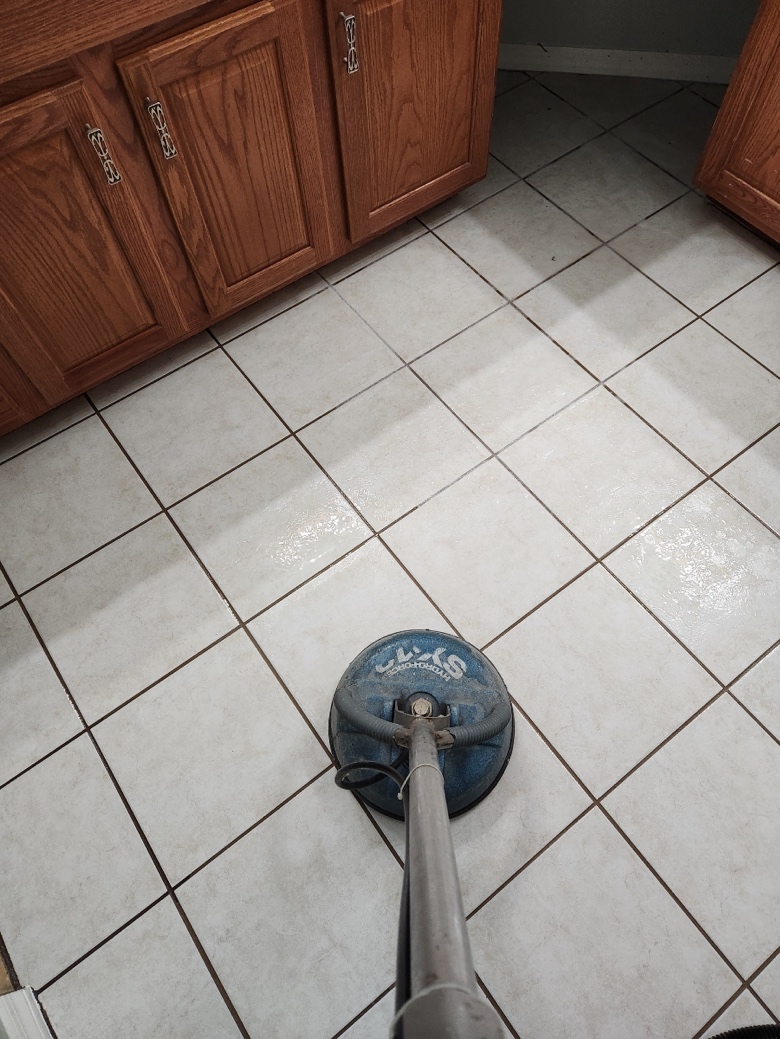
Our Tile & Grout Cleaning Process
Every floor is different, so we match the method to your tile and the condition of the grout. A typical service includes:
- Inspection and assessment. We check the tile type, grout condition and any problem areas such as stains or mildew.
- Pre-treatment. We apply a cleaning solution chosen for your floor, which loosens embedded grime without damaging the surface.
- High-pressure steam cleaning. Industrial-grade equipment drives hot water into the grout lines and tile pores to break down stubborn dirt, grease and mould, and extract it.
- Scrubbing and detailing. For tough stains we use specialised brushes and tools, so no spot is missed.
- Sealing. A quality sealer protects the clean grout from dirt, spills and moisture, and makes routine cleaning easier.
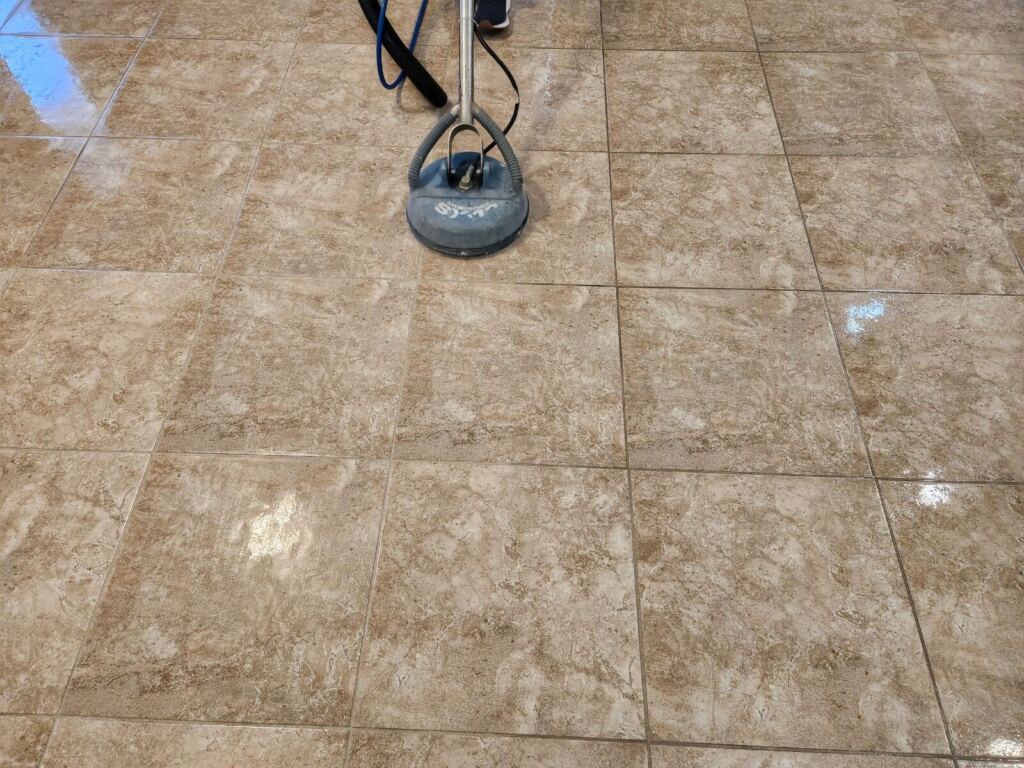
We use eco-friendly, non-toxic cleaning solutions that are tough on stains and gentle on tile, and safe for your family and pets.
Tile Cleaning for Homes and Businesses
For homes, we clean kitchens, bathrooms, entryways, hallways and living areas, whether your floors are ceramic, porcelain or natural stone.
For businesses, clean tile and grout give customers a better first impression and make a safer, more professional space. In high-traffic commercial areas, grout restoration and sealing can make the whole floor look new. We also offer commercial carpet cleaning, so one team can look after all your floors.
Professional Cleaning vs. DIY
Sweeping and mopping are essential, and some DIY methods can help with light stains. For built-up grime, they usually aren’t enough, and harsh chemicals can damage your tile.
| Method | Works well for | Watch out for |
|---|---|---|
| Baking soda and water paste | Light stains on ceramic or porcelain grout | Won’t remove deep, set-in buildup. Over-scrubbing wears grout |
| Hydrogen peroxide and dish soap | Tougher stains on light grout | Test a small area first. Rinse well |
| Store-bought and enzymatic cleaners | Grease and organic stains, moderate dirt | Choose one made for your tile type. Can leave residue |
| Household steamers | Small areas and light upkeep | Limited power and extraction |
| Professional steam cleaning | Whole floors, heavy buildup, mould-prone areas, natural stone, commercial floors | Costs more up front, but gives the deepest and longest-lasting result |
A caution on vinegar, bleach and ammonia: vinegar is acidic and can etch natural stone and wear down grout and sealer. Bleach and ammonia can weaken grout and damage tile finishes. When in doubt, use a pH-neutral cleaner or call a professional. Always test any product in a small, hidden area first.
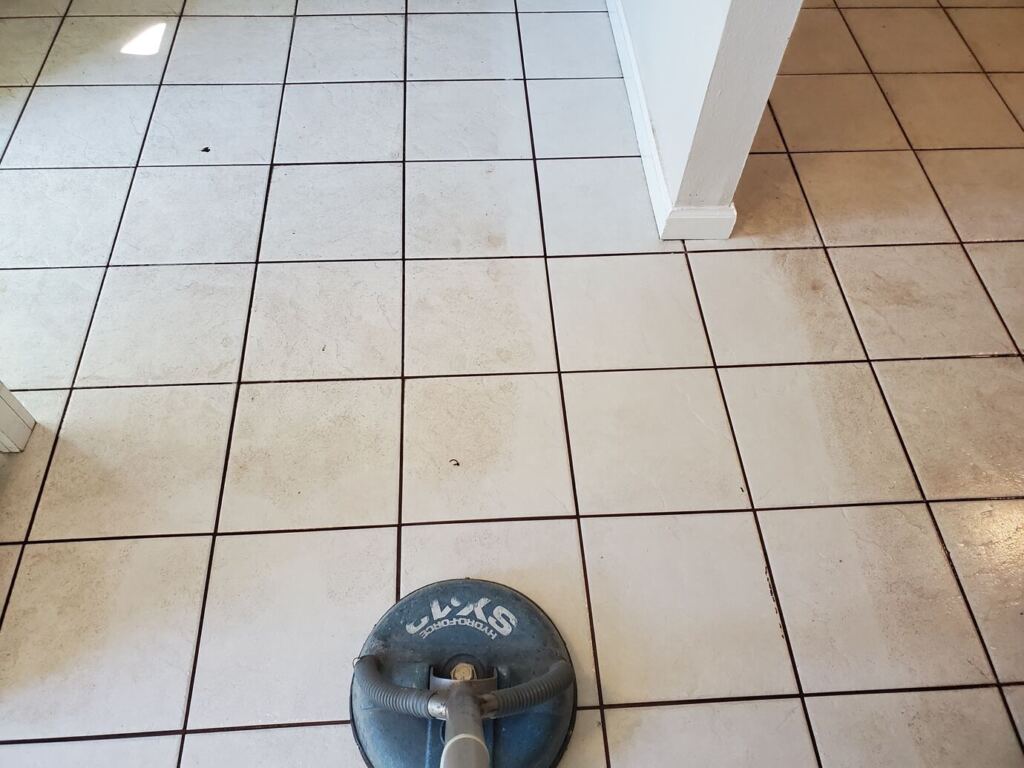
Signs It’s Time for a Professional Clean
- Grout stays dark even after regular cleaning
- Tile looks dull, cloudy or sticky after mopping
- Mould or mildew that DIY methods can’t remove
- Stubborn stains from spills, pets or heavy traffic
- Hard water stains in showers or on bathroom floors
- You’re preparing to sell, rent or reopen a space
Most properties benefit from a professional deep clean once or twice a year, depending on traffic, pets, children and how much moisture the floor sees.
Natural Stone Needs Special Care
Marble, travertine, slate and other stone are sensitive to acids and harsh chemicals. We identify the stone first, then use pH-neutral, stone-safe products and techniques. For more information, see our guide to tile and grout cleaning for all tile types.
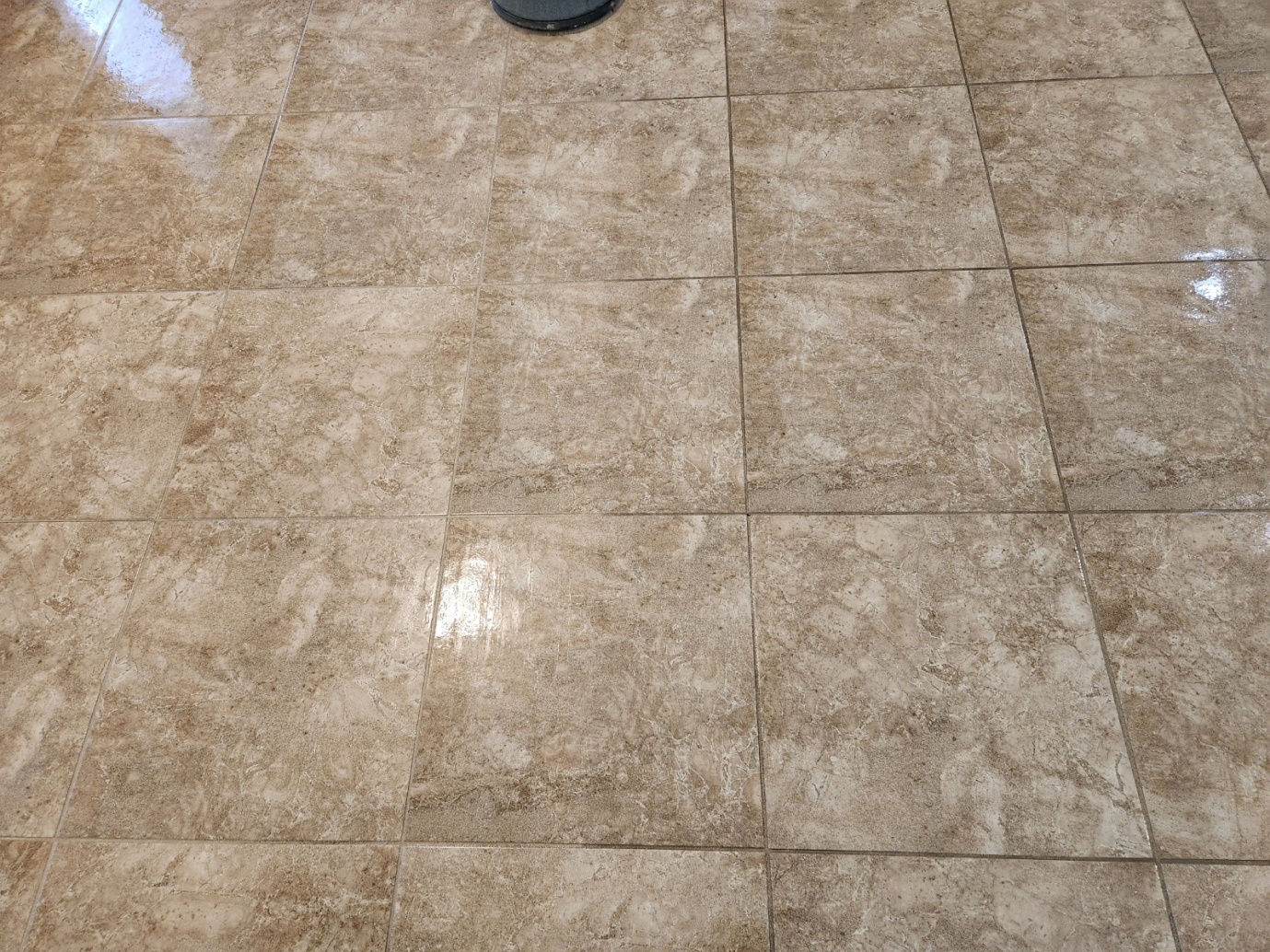
How to Keep Your Tile Clean Between Visits
- Sweep or vacuum regularly. Daily in busy areas, and at least a few times a week elsewhere. Sand and grit scratch tile like sandpaper.
- Mop with a pH-neutral cleaner and a damp microfiber mop. Avoid soaking the floor, because water seeps into grout lines.
- Wipe spills right away. Wine, coffee, citrus juice and grease stain porous grout quickly. Use a mild soap solution for sticky spills and never an abrasive scrubber.
- Use mats and rugs at entrances and in high-traffic areas, and take shoes off at the door to keep sand outside. Protective pads under furniture help too.
- Control moisture. Ventilate bathrooms and kitchens and run a dehumidifier or exhaust fan if needed.
- Scrub gently. Use a soft brush or old toothbrush for grout, never steel wool or hard-bristled brushes.
- Seal your grout. Reseal about every one to two years, sooner in showers and busy areas. Make sure the grout is clean and dry first.

Seasonal tips for Tarpon Springs
- Spring and summer: Humidity and rain make grout more prone to mould and mildew. Deep clean and seal before the wettest months.
- Fall: Check entry mats and sweep often as more outdoor debris comes inside.
- Winter: Holiday traffic and spills dull floors. A deep clean before and after the season keeps them looking fresh.
Why Choose Steambrite Cleaning Services?
- Local tile and grout cleaning in Tarpon Springs, plus Clearwater, Trinity, East Lake and Palm Harbor
- Professional-grade steam equipment, with solutions matched to your tile
- Cleaning for ceramic, porcelain and natural stone, in homes and commercial spaces
- Eco-friendly products that are safe for kids and pets
- Free estimates, and a team you can get to know
Your floors are only part of the job. We also clean carpet, wool rugs, hardwood floors and furniture and upholstery. See all of our Tarpon Springs cleaning services and service locations.
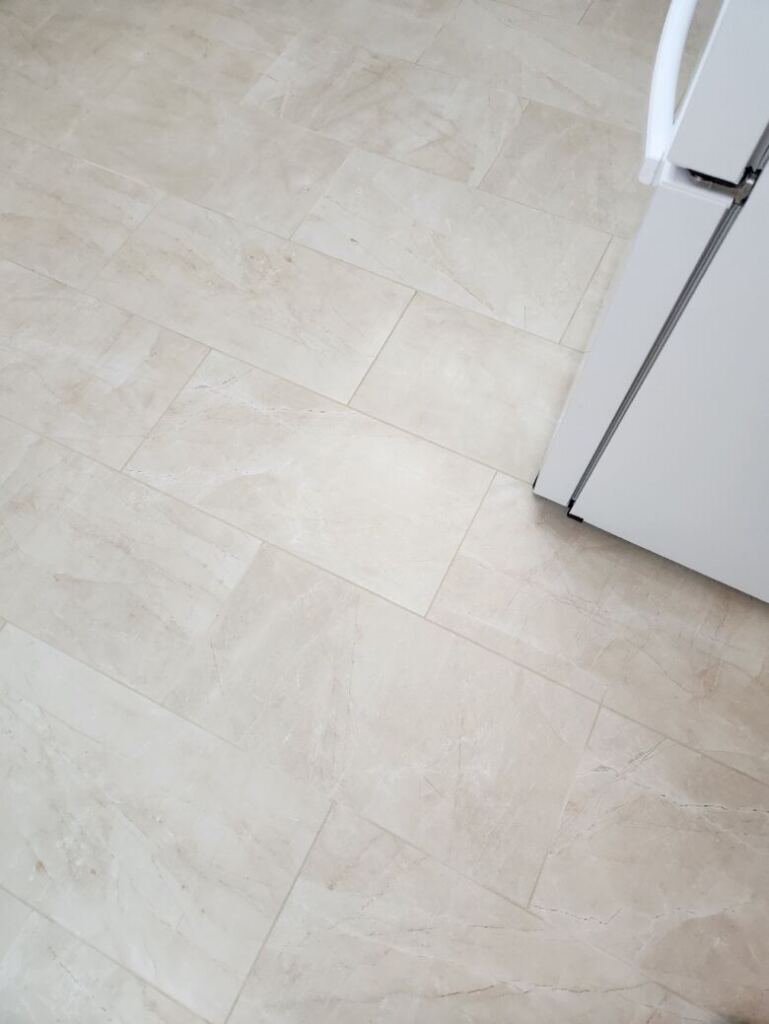
Frequently Asked Questions
How often should I have tile and grout cleaned professionally?
Once or twice a year suits most properties. Busy kitchens, entryways, showers and commercial floors may need it more often. If grout stays dark after scrubbing, it is due.
Why does my grout look dirty right after mopping?
Grout is porous and holds dirt, grease and soap residue below the surface. Mopping cleans only the top layer and can push dirty water into the grout lines. Steam extraction removes what a mop can’t.
Is steam cleaning safe for my tile and grout?
Yes, when done properly. We inspect first and match the method to your tile. Cracked or crumbling grout may need repair before cleaning. Read more in our guide to whether steam cleaning damages grout.
Should grout be sealed after cleaning?
We recommend it. Sealed grout resists stains, moisture and mould, and is easier to keep clean. Reseal about every one to two years.
Can you clean natural stone tile?
Yes. We identify the stone first and use pH-neutral, stone-safe products, because acids and harsh cleaners can etch it.
Can vinegar or bleach clean my grout?
We advise against both. Vinegar can etch stone and break down grout and sealer, and bleach can weaken grout. A baking soda and water paste is a gentler option for light stains on ceramic or porcelain.
Do you clean tile in businesses?
Yes. We clean tile and grout in commercial spaces as well as homes. Contact us for a free estimate.
