


Tile floors are chosen because they’re durable, stylish and easy to maintain. At least, that’s the expectation. Over time, grout lines darken, tile loses its brightness and mopping stops delivering real results. Knowing what happens during a professional clean helps set the right expectations, from the first inspection to the final extraction.
Why Tile and Grout Need a Deeper Cleaning Approach
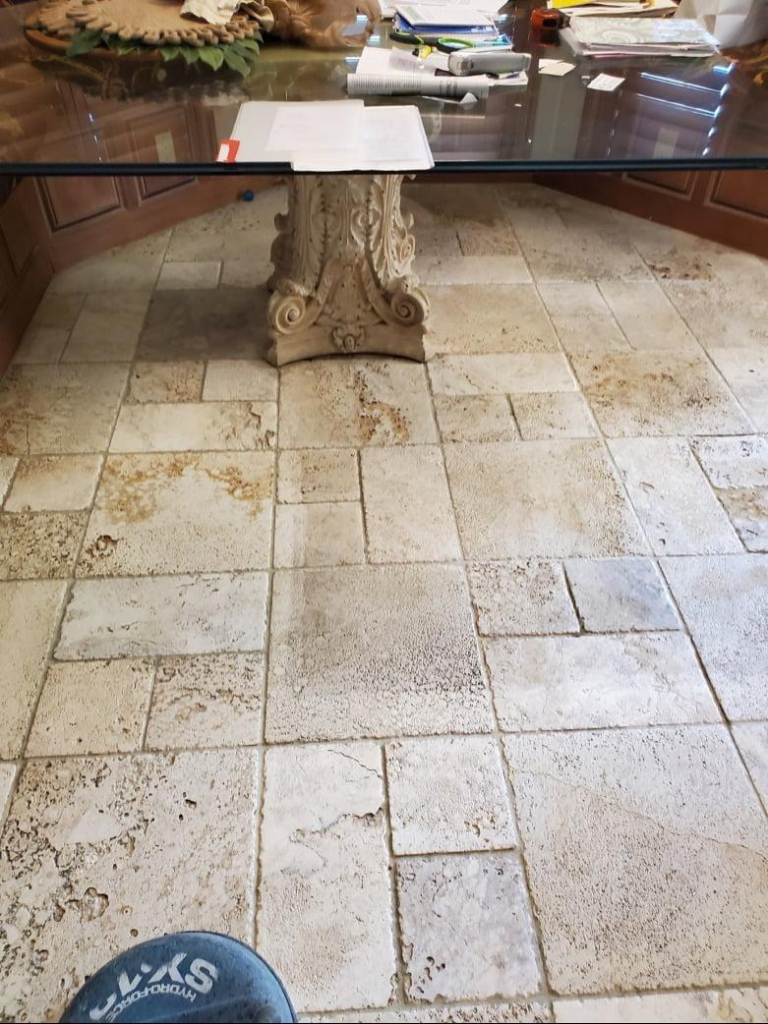
Tile itself is tough, but grout is porous. Dirt, grease, moisture and bacteria sink deep into grout lines over time, and regular mopping mostly moves surface dirt around, often leaving residue that attracts more grime. A professional process removes what mops can’t reach by cleaning deep within grout lines and textured tile, so floors are restored instead of just wiped down.
The Process, Step by Step
Step 1: Inspection
We start by identifying the tile type, grout condition, any coating, damaged areas and how heavy the soil is. Ceramic, porcelain, marble, travertine and other stone don’t all tolerate the same products, so we choose a solution that suits your floor. If the finish is unknown, or there’s an old sealer or signs of chemical damage, a spot test comes first. We also talk through any damaged or permanently stained areas before we begin, so expectations are clear. The Natural Stone Institute notes that stain treatment depends on the type of stone and the stain.
Step 2: Pre-spray to loosen buildup
Every proper clean starts with a specialised pre-spray. It’s designed to break down oils, soap residue and ground-in dirt that have settled into grout and tile. The solution is applied evenly and given time to work. This dwell time matters because it lets buildup soften and separate from the surface instead of being forced deeper into grout lines.
Step 3: Agitation to lift stubborn soil
Once the solution has loosened the soil, we agitate. V-cut brushes made to fit grout lines lift embedded material, and we work the surrounding tile too . The goal is controlled soil removal, not abrasive force. This step is especially important in kitchens, bathrooms and entryways, where grout lines start to return closer to their original colour.
Optional: rotary scrubbing or a second wash
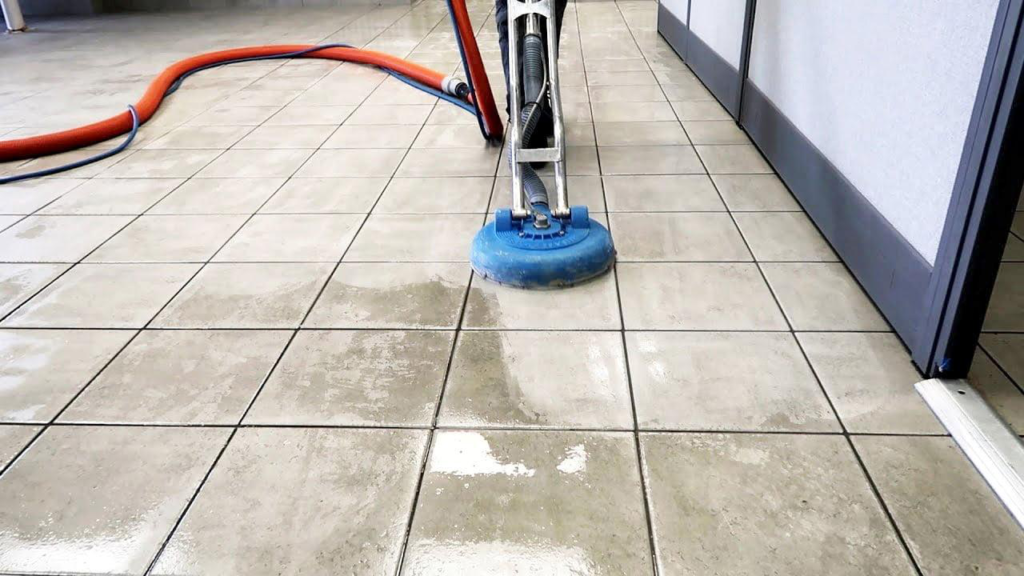
Some floors need extra attention. Long-neglected kitchens, entryways and commercial floors, or floors that have never been professionally cleaned, may call for a rotary scrubber with soft bristles, which gives consistent pressure that hand scrubbing can’t match. Very heavily soiled floors may need a restorative dual wash instead. We recommend extra work only when the floor needs it, and we explain the reasons first.
Step 4: Steam and extraction
This is the step that separates professional cleaning from mopping. After agitation, a professional surface cleaner uses hot water and steam to flush loosened dirt, residue and solution from the grout, and powerful suction pulls it away. Edges, corners and grout lines may get focused attention. Because the solution is recovered rather than left behind, floors don’t dry into a sticky film, and they dry faster than they would after heavy wet mopping.
Step 5: Sealing (optional)
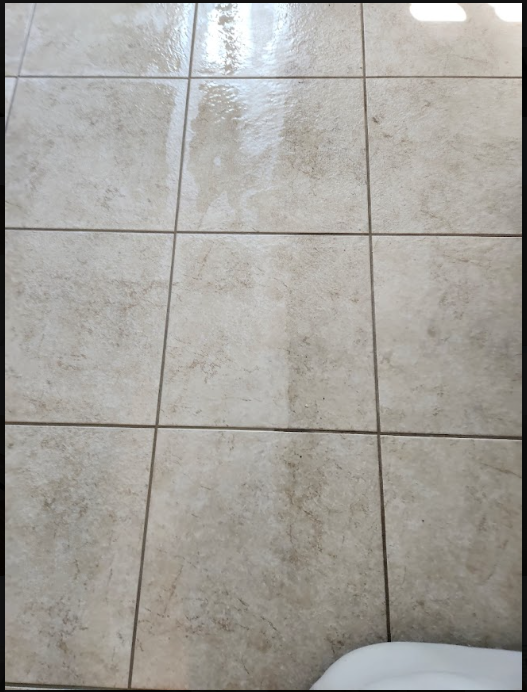
A sealer reduces how much dirt and liquid grout absorbs and makes routine cleaning easier. Reseal about every one to two years.
What You’ll See Afterwards
- Brighter grout and clearer tile. Colours look sharper, and the room feels more open. Many people are surprised by how much dirt was trapped below the surface.
- Fresher rooms. Odours from trapped dirt, grease and moisture fade, which you notice most in kitchens and bathrooms.
- Easier maintenance. Routine mopping works better because residue is no longer sitting in the grout.
It’s worth being realistic. Cleaning removes soil and exposes the original surface, but it can’t replace missing grout, repair cracks or reverse every stain. Etching, mineral changes or damage that dirt had hidden may show up once it’s clean. We’ll explain those limits before recommending extra work.
The Long-Term Benefits
Dirt acts like sandpaper, slowly wearing down grout and tile. Removing that grit helps floors last longer and keep their look. Regular deep cleaning also reduces the need for harsh scrubbing between visits.
How Often Should Tile and Grout Be Cleaned?
Most homes benefit from a professional clean once or twice a year. Homes with pets, children or heavy traffic may need it more often. A regular schedule prevents heavy buildup and saves effort in daily maintenance. In between, sweep or vacuum, mop with a pH-neutral cleaner, wipe spills promptly and avoid bleach, vinegar and harsh chemicals.
For signs that it’s time, read 5 signs your tile floors need professional cleaning, and for kitchens and bathrooms see why tile cleaning matters for kitchens and bathrooms.
Where We Serve
Steambrite Cleaning Services provides tile and grout cleaning in Clearwater, West Chase, Oldsmar, New Port Richey, St. Petersburg and nearby areas . See our Clearwater, New Port Richey and St. Petersburg pages, or all service locations.
Frequently Asked Questions
What happens during a professional tile and grout clean?
We inspect the floor, apply a pre-spray and let it dwell, agitate the grout lines with brushes, use a rotary scrubber or second wash where needed, then steam clean and extract the loosened soil and solution. Sealing is optional.
Why is dwell time important?
It gives the solution time to break down oils, soap residue and ground-in dirt so they separate from the surface, instead of being pushed deeper into the grout.
When do you use a rotary scrubber?
For floors with years of buildup, constant traffic, larger areas or floors that have never been professionally cleaned. It applies consistent, even scrubbing.
How is this different from mopping?
Mopping can move dirty liquid into recessed grout and leave residue. Professional cleaning agitates the soil and then recovers it, with the cleaning solution, using extraction.
Will every stain come out?
Not always. Cleaning removes soil and can expose the original surface, but it can’t repair cracks, replace missing grout or reverse every stain. We explain the limits before extra work.
How often should I have my tile and grout cleaned?
Once or twice a year for most homes, and more often for pets, children and heavy traffic.
