


Tile floors define the look and hygiene of kitchens and bathrooms. These rooms face constant moisture, grease, spills and foot traffic, and over time dirt settles deep into the grout, dulls the tile surface and leaves the room feeling less clean than it should. Many homeowners scrub regularly and still struggle to get lasting results. This page explains why, what each room needs, and how professional cleaning and simple upkeep can fix it.
The Hidden Problem Beneath Your Tiles
Tile looks smooth and easy to wipe, but grout is porous. Its tiny openings trap grease, dirt, soap residue and bacteria. Kitchen floors collect oils and food particles every day. Bathroom floors absorb soap scum, moisture and mould spores.
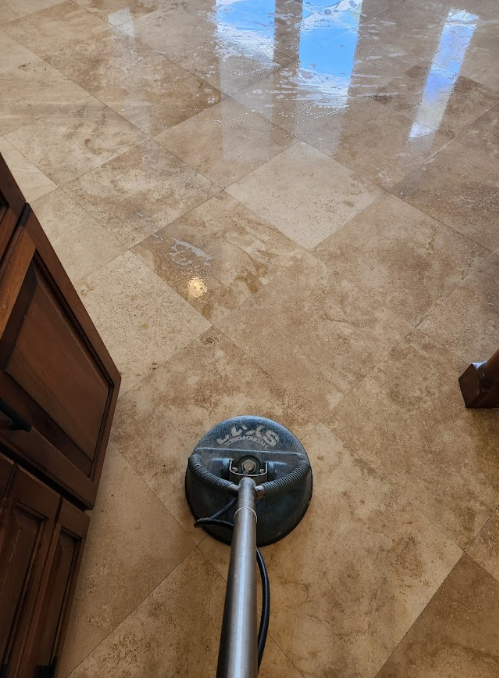
Regular mopping can spread grime instead of removing it, so you may notice discolouration, stubborn stains or odours even after cleaning. Those are signs of deeper buildup that basic methods can’t reach. A professional tile and grout cleaning uses specialised equipment and solutions to break buildup down and extract it from the grout.
Kitchens: Grease, Spills and Heavy Wear
Kitchen floors take constant punishment. Grease splatters and spills bond with dirt and form a sticky layer that dulls tile and stains grout. Grease doesn’t respond well to standard cleaners; it clings to the surface and attracts more dirt, so the layer thickens and becomes harder to remove.
Professional kitchen tile cleaning uses targeted solutions and high-temperature steam to break down grease, then extracts it so the tile is clean rather than just wet. That restores the tile’s shine and removes the residue that attracts more dirt.
Hygiene in food areas. Spills carry bacteria, and food-preparation areas need clean floors. A deep clean removes the soil and residue those microbes live in, which helps keep the kitchen a safer place to work.
Bathrooms: Moisture, Mildew and Soap Scum
Bathrooms combine warmth, moisture and limited ventilation, so mould and mildew can establish themselves in damp grout. The EPA explains the difference between mould and mildew and why moisture control matters. Watch for:
- Grout damage. Water works into grout lines and can weaken them over time, leading to cracks, discolouration and dark spots, sometimes with a musty smell.
- Slippery floors. Soap residue and mineral deposits create slick surfaces. Removing these layers improves traction and makes the room safer.
- Mould and mildew. Deep cleaning removes the soil they feed on. If mould keeps returning, address the moisture source or ventilation too.
Open a window or run the exhaust fan after showers so the room dries faster. Cleaning once is not a substitute for keeping the room dry.
Why Professional Equipment Makes the Difference
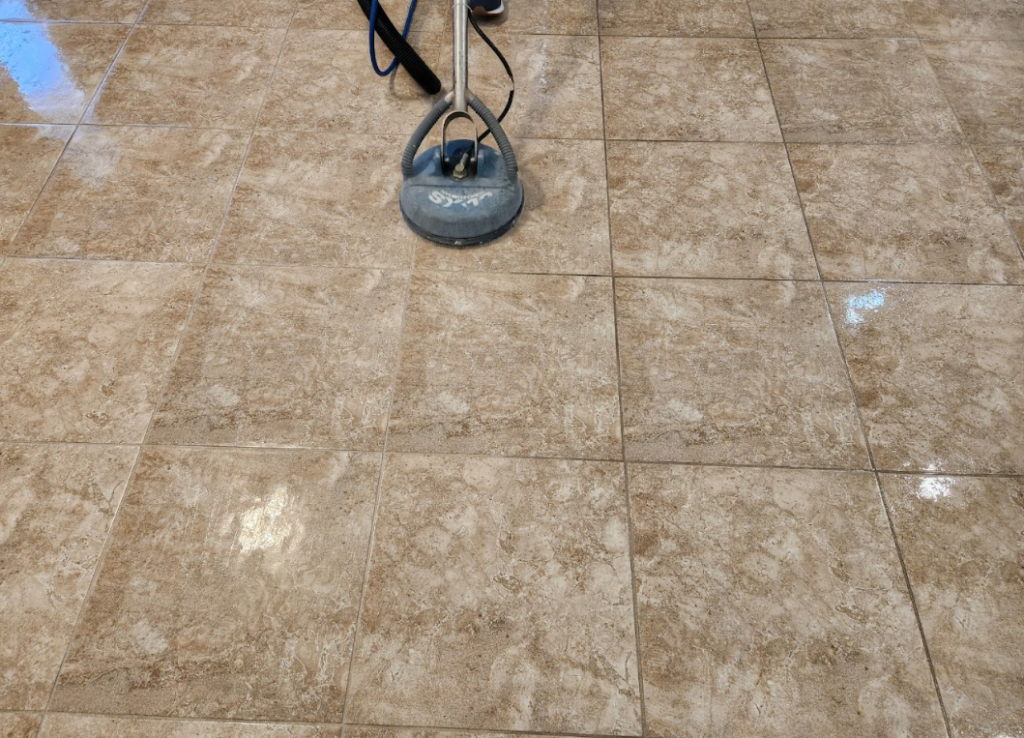
Household tools can’t match professional-grade systems that combine heat, agitation and extraction:
- High-temperature steam penetrates grout lines and loosens embedded dirt, with less reliance on harsh chemicals.
- Specialised brushes are designed to reach tight grout lines and textured tile without damaging the surface.
- Powerful extraction removes the loosened debris and the solution, leaving floors nearly dry.
That’s why the result goes deeper than a DIY clean. See the full sequence in what to expect when we clean tile and grout.
Benefits of Professional Tile Floor Cleaning
- Restored appearance. Grime makes tile look old and worn. Deep cleaning brings back colour, and grout lines look brighter and more even.
- A longer-lasting floor. Contaminants weaken grout and damage tile over time. Regular professional cleaning helps prevent deterioration and expensive repairs.
- Better indoor air quality. Dust, mould and bacteria trapped in grout can affect the air you breathe. Removing them helps.
- Time and effort saved. Deep cleaning grout takes significant time and energy.
Maintenance Tips for Cleaner Tile
| Do | Don’t |
|---|---|
| Sweep or vacuum regularly to remove loose dirt | Use harsh chemicals, bleach or vinegar that damage grout and sealer |
| Wipe spills straight away | Use excessive water when cleaning |
| Mop with a pH-neutral cleaner | Use abrasive tools that scratch tile |
| Put mats at entrances and high-traffic areas | Ignore early signs of mould or discolouration |
Most homes benefit from a professional clean once or twice a year, and a sealer applied afterwards, reapplied about every one to two years, makes routine cleaning easier.

Protect Your Investment
Tile flooring is a significant investment, and regular maintenance preserves its look. Ignoring buildup leads to repairs or replacement that proper care could have avoided. Bright tile, fresh grout and spotless surfaces make kitchens feel more hygienic and bathrooms more comfortable.
Where We Serve
Steambrite Cleaning Services provides kitchen and bathroom tile cleaning in Clearwater and across our service area . See our Clearwater page or all service locations. We also clean vinyl floors, hardwood and carpet.
Frequently Asked Questions
Why do kitchen and bathroom tile floors get so dirty?
Kitchens collect grease, oils and food spills, while bathrooms collect soap scum, moisture and mould spores. Grout is porous and holds onto all of it.
Is mopping enough for kitchen tile?
Mopping helps with surface dirt, but it can spread grease and dirty water into the grout. Over time, a professional deep clean is needed to extract what builds up.
How do I stop mould coming back on bathroom grout?
Remove the soil with a deep clean, then keep the room dry: ventilate, wipe damp areas and fix any leaks. Sealing grout makes it easier to keep clean.
Does professional cleaning make a bathroom floor safer?
Yes. Removing soap residue and mineral deposits improves traction on slick floors.
How often should kitchen and bathroom tile be professionally cleaned?
Once or twice a year for most homes. Heavy-use kitchens and bathrooms may need it more often.
Which products should I avoid on tile and grout?
Harsh chemicals, bleach, vinegar and abrasive tools can damage grout, sealer and some tile surfaces. Use a mild pH-neutral cleaner.
