


Natural stone gives a home a distinctive look and texture, but it needs more consideration than ceramic or porcelain. Marble, travertine, limestone, slate and granite react differently to cleaning products, moisture and abrasive tools, and the wrong approach can leave etching, discolouration or surface damage that’s usually permanent. This guide covers what makes stone different, how to clean it safely, the mistakes to avoid and when to call a professional.
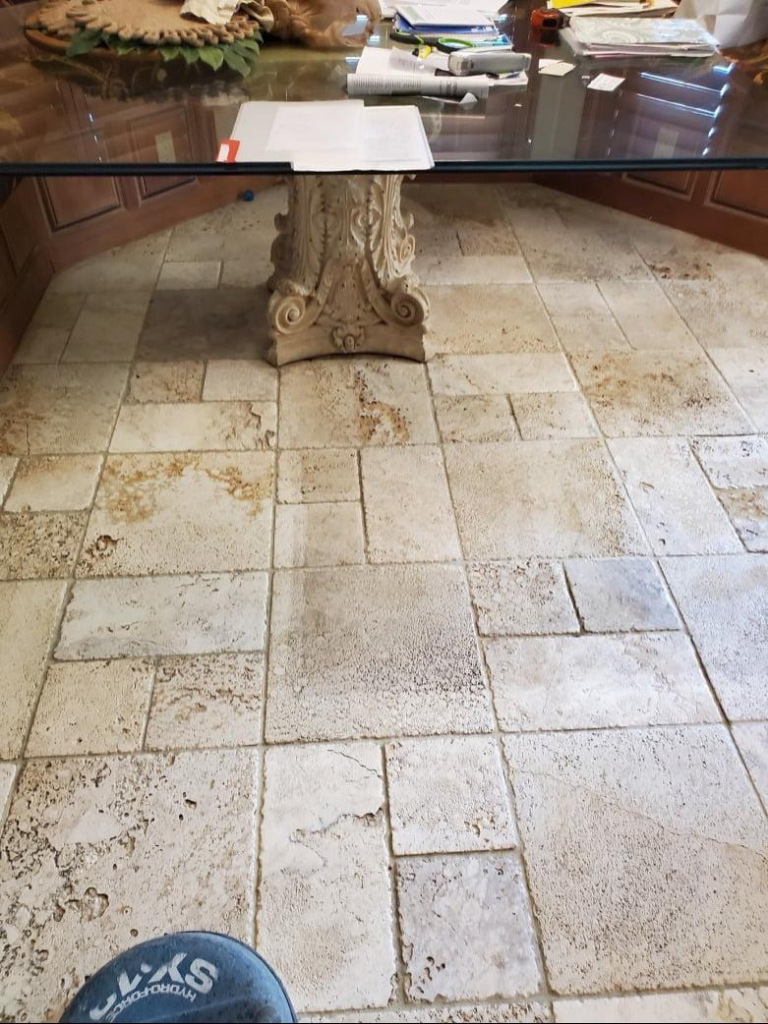
Why Natural Stone Needs Specialised Care
Ceramic and porcelain are manufactured and fired at high heat to create a hard, non-porous surface. Natural stone is quarried from the earth, and its composition varies from slab to slab. Two things matter most:
- Most stone is calcium-based, so it reacts to acid. A splash of lemon juice, a vinegar-based cleaner or even certain soaps can etch the surface, leaving a dull, cloudy mark that no amount of scrubbing removes. Marble and limestone are especially vulnerable.
- Stone is porous. It absorbs liquids in a way ceramic doesn’t, which is why spills need quick attention. Pores can also hold dirt, bacteria and allergens.
The Natural Stone Institute recommends neutral cleaners made for stone and avoiding acidic household products on acid-sensitive surfaces. Before applying any cleaner, identify your stone and learn its care requirements.
Quick reference by stone type
| Stone | Sensitivity | Notes |
|---|---|---|
| Marble | High to acids | Etches easily; use stone-safe, pH-neutral products only |
| Travertine | High to acids; porous | Holes and pores hold dirt; avoid vinegar and lemon |
| Limestone | High to acids | Soft and porous; blot spills quickly |
| Slate | Lower, but still porous | Textured surface holds dirt; avoid abrasive pads |
| Granite | Lower to acids | Dense, but sealing still matters |
Not sure what you have? Check manufacturer guidance, or ask a professional to identify it.
Common Mistakes That Damage Stone Floors
- Assuming a product that works on other flooring is safe on stone. Harsh chemicals, abrasive powders and rough scrubbing tools can affect the surface.
- Using acidic “natural” cleaners. Vinegar and lemon seem harmless but can etch susceptible stone.
- Using too much water. Clean stone appropriately and let it dry rather than leaving it excessively wet.
- Ignoring spills. Acidic foods and drinks, oils and other substances can stain or etch. Blot instead of wiping across the surface, as the Natural Stone Institute advises.
- Skipping a spot test. Always test a new product on a small, hidden area.
- Repeating the wrong mop solution weekly. It gradually wears down a finish that took time and money to achieve.
Bleach, ammonia and most general-purpose or “heavy-duty” cleaners strip sealer and can start etching the stone itself. Abrasive scrub pads dull the polish that gives stone its sheen.

Everyday Care That Protects Stone
- Dust often. Dust and grit gradually wear down the surface and cause scratches and dullness. Use a soft dry mop, a microfibre cloth or a vacuum without a hard-bristled head.
- Use a pH-neutral, stone-specific cleaner. Follow the label, and test a small area first.
- Mop lightly and dry. Use a damp, not wet, mop; rinse; and dry with a lint-free cloth to prevent water spots and streaks.
- Blot spills straight away. Don’t wipe them across the stone.
- Be careful with grout. Use a soft brush or an old toothbrush on grout lines, never abrasive tools. The same acidic or abrasive products that harm stone can also degrade grout and let moisture and grime deeper.
- Prevent hard-water deposits. In bathrooms and kitchens, wipe stone after use and squeegee shower walls. A water softener helps if you have hard water.
Treating a stubborn stain
For a stubborn spot on stone, a poultice of baking soda and water can draw out the stain: apply the paste, cover with plastic wrap, and leave it overnight. Test first, work gently, and be cautious on porous, acid-sensitive stone like marble. If a stain doesn’t lift, stop and call a professional, as repeated attempts can make it worse.

Sealing Natural Stone
A stone sealer protects against moisture and stains by slowing absorption. How often you need to reseal depends on the stone and how much traffic it sees. A quick test: if water darkens the stone and soaks in instead of beading, it’s time. As a rule of thumb, plan to reseal about every one to two years, and ask us to recommend the right product for your material. Sealed stone cleans more easily and is better protected from etching and stains.
What Professional Stone Cleaning Does
Professional cleaning begins with understanding the material. A professional can assess the stone, identify visible soil or staining, and choose an appropriate solution and process, which removes the guesswork. It’s most useful when dusting and mopping aren’t enough to deal with accumulated dirt, when you have an unfamiliar stone, or when a floor has become dull or heavily soiled.
Our approach for natural stone :
- We identify the stone on-site and adjust the process to it.
- We use pH-balanced solutions designed for natural stone, which lift grime without risking the finish.
- We treat the stone and its grout as one connected system, so neither is damaged.
- We use suction/extraction equipment to remove contaminants and the solution without leaving residue.
- We can seal afterwards to protect against future staining and wear.
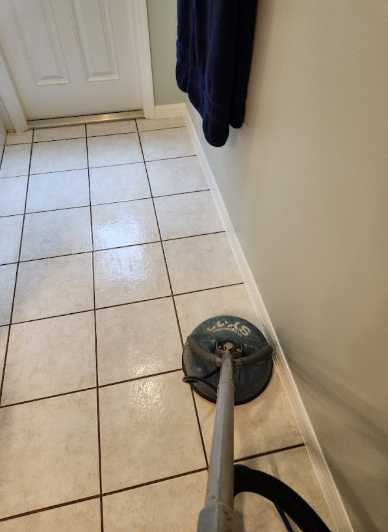
When natural stone is cleaned and sealed correctly, it can last for generations, developing a natural patina instead of a worn, dull look. Periodic professional attention is what preserves the finish long term.
Stone and Health: Palm Harbor’s Humid Climate
Because stone and grout are porous, they can trap dirt, bacteria, mould spores and allergens that mops miss. Florida’s humidity creates conditions where mould can grow on grout and stone, leading to stains, musty odours and respiratory irritation for some people. The EPA’s guide to indoor air quality explains why keeping surfaces clean and dry matters.
Regular professional cleaning removes the soil that supports growth, and sealing slows future absorption. High-moisture areas such as bathrooms, kitchens and entryways deserve the most attention. Ventilation and fixing leaks matter just as much as cleaning.
When to Call a Professional
- The stone looks dull, cloudy or heavily soiled despite your care
- You’re not sure what type of stone you have
- A stain won’t lift, or you see etching
- The grout is dark, or you suspect mould
- The floor hasn’t been cleaned or resealed in over a year or two
For Clearwater homes, see our stone tile cleaning guide for Clearwater, and for tile and grout generally read our complete guide.
Where We Serve
Steambrite Cleaning Services provides stone and tile and grout cleaning in Palm Harbor, Clearwater, Trinity, East Lake, Tarpon Springs, West Chase, St. Petersburg and Odessa . See our Palm Harbor and Tarpon Springs pages, or all service locations. We also clean wood floors, vinyl, wool rugs and furniture.
Frequently Asked Questions
What is the best way to clean natural stone floors?
Dust or vacuum regularly, then mop lightly with a pH-neutral cleaner made for stone, rinse, and dry with a lint-free cloth. Test any product on a small, hidden area first.
Can I use vinegar or lemon on marble, travertine or limestone?
No. These stones are calcium-based and react to acid, so vinegar, lemon and acidic cleaners can etch the surface and leave dull, cloudy marks.
What cleaners should I avoid on stone?
Vinegar, lemon, bleach, ammonia, harsh or general-purpose cleaners, abrasive powders and scouring pads.
How do I remove a stubborn stain from stone?
Blot fresh spills. For a set stain, a baking soda and water poultice covered with plastic wrap overnight can help; test first and be careful on marble. If it doesn’t lift, call a professional.
How often should natural stone be sealed?
About every one to two years is a good rule of thumb, but it depends on the stone and traffic. If water soaks in instead of beading, it’s time to reseal.
Does stone need special care in Florida’s humidity?
Yes. Moisture can feed mould on grout and porous stone, so keep areas ventilated and dry, fix leaks and have floors cleaned and sealed regularly.
How often should stone floors be professionally cleaned?
Once or twice a year for most homes, and more often for high-traffic or high-moisture areas.
