


Tile is a popular choice for homeowners because it’s durable, water-resistant and timeless. Whether you have ceramic, porcelain or natural stone, it’s built to handle heavy foot traffic. Yet over time even resilient tile starts to look dull and discoloured. The culprit is often not the tile. It’s the grout lines, and the film left on the surface.
That’s where professional tile and grout cleaning makes the difference. This page explains why it works better than DIY, what a professional visit involves, what results to expect, and how to choose a provider. For the full background, see our complete guide to tile and grout cleaning.
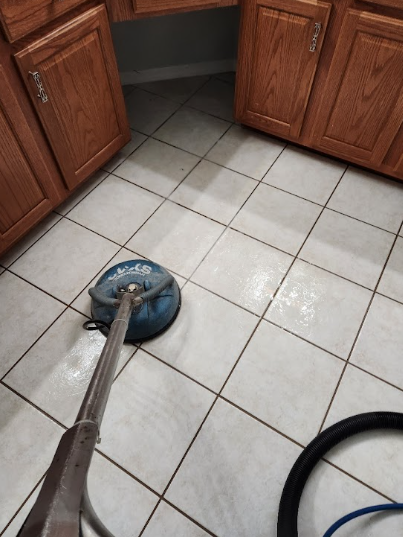
Why Tile Floors Lose Their Shine
Sweeping and mopping keep surface dirt at bay, but they often miss the deeper issues:
- Grout is porous. It absorbs dirt, grease, spills and moisture, so it darkens even when the tile looks fine. That creates a stark contrast between clean tile and stained grout.
- Detergent film. Many cleaners leave a thin residue that dulls the finish, traps fine dirt and makes floors look dirty again faster. If your floor looks better for a day and then worse, residue is often part of the problem.
- Dirty mop water. Mops lift surface soil but also spread dirty water, which settles into the low points of the floor: the grout lines.
- Traffic. Entryways, kitchens and hallways press fine grit into texture and grout, leaving permanently darker lanes.
- Moisture. In bathrooms and kitchens, damp grout invites mildew. The EPA explains the difference between mould and mildew.
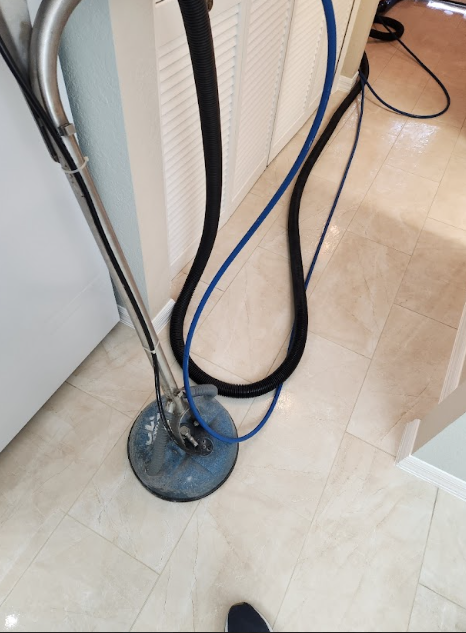
Reasons to Hire a Professional
1. Experience and the right method for your floor
Tile isn’t one material. Ceramic, porcelain, marble, travertine and other stone each have different needs. Experienced cleaners can identify your tile and grout and choose methods and products that are safe for them. Using the wrong product can backfire: too harsh and you risk dulling some surfaces, too mild and it won’t touch heavy buildup.
2. Equipment household tools can’t match
Store-bought products are mild and suit basic cleaning. Professionals use high-powered steam and extraction equipment that reaches deep into grout lines, lifting out buildup that mops and brushes leave behind. Steam also removes the cleaning solution itself, so it doesn’t dry into new residue.
3. A deeper, more hygienic clean
Because grout is porous, it can trap bacteria, mould and allergens. Deep cleaning helps remove them, which matters for children, older adults and anyone with asthma or allergies. Bacteria and allergens thrive in damp grout, especially in kitchens and bathrooms.
4. Protection for your floors
Grit and soil act like sandpaper and slowly wear down tile and grout, which can lead to cracks and surface damage. Regular professional cleaning removes it before it causes lasting harm, and can help you avoid costly repairs or replacement. A sealer applied afterwards protects the clean grout from future stains and moisture.
5. Time and effort saved
Scrubbing grout on your hands and knees is slow and physically demanding, especially across several rooms. A trained team does it faster, with less disruption to your day.
6. A better-looking home, and a stronger first impression
Clean, bright tile and uniform grout lift the look of a room. Floors are among the first things buyers notice, and clean kitchens and bathrooms suggest a home that’s been cared for. For businesses, clean floors reflect professionalism.
7. Safer products and methods
Acids and bleach can wear down tile surfaces and grout. Professionals match the solution to the surface and avoid products that leave a sticky residue. Everything used is cleaned off before the crew leaves.
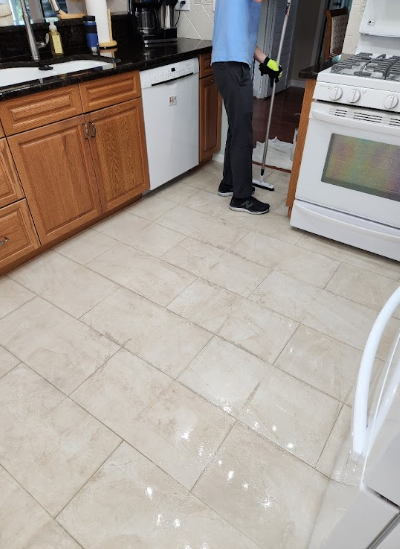
What a Professional Visit Involves
A noticeable before-and-after isn’t luck. It’s what happens when each step sets up the next.
- Inspection. We identify your tile type, grout condition and problem areas.
- Full-floor pre-spray. A solution suited to your material is applied across the whole floor and left to dwell, so it can break down the film and start loosening grime in the grout. Dwell time matters because it lets the solution penetrate instead of just wetting the surface.
- Grout-line agitation. V-cut brushes fit into the grooves to physically lift grime from where it hides. We can focus on entryways, kitchens and heavily trafficked or darkened sections.
- Dual wash, for heavy soil. Floors with years of buildup or greasy residue may need two passes: the first lifts the worst of the grime, the second refines the clean and removes leftover residue. This avoids a floor that looks better but still feels sticky or dull.
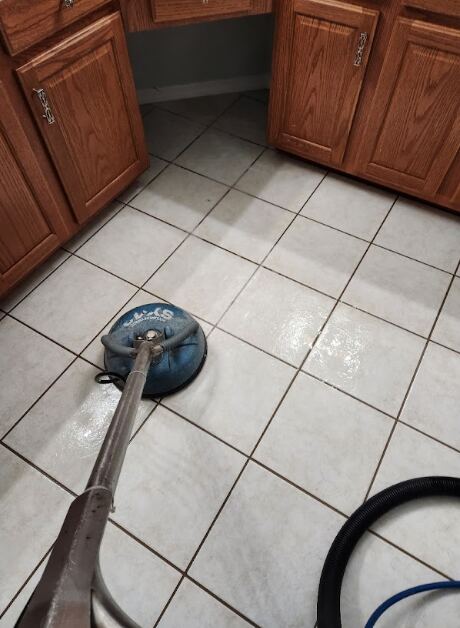
- Rotary scrubbing, when it’s the right tool. For heavily soiled floors we may recommend a rotary scrubber. It applies consistent agitation across the surface and helps in large, high-traffic areas, stubborn kitchen residue and commercial floors maintained for years with a mop and bucket.
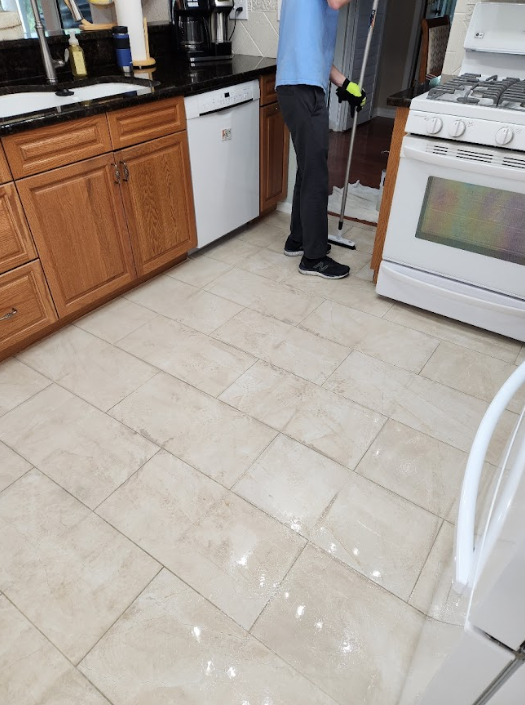
- Steam cleaning with a surface cleaner. This is the removal step. It lifts away the broken-down film, the loosened dirt in the grout and the cleaning solution itself, so floors don’t just look better, they stay better.
- Sealing (optional). A sealer protects grout from future staining.
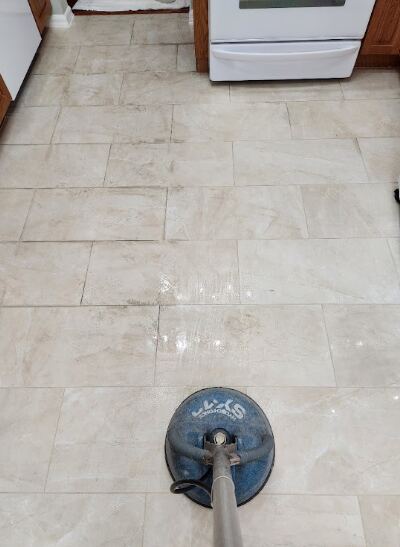
What Results to Expect
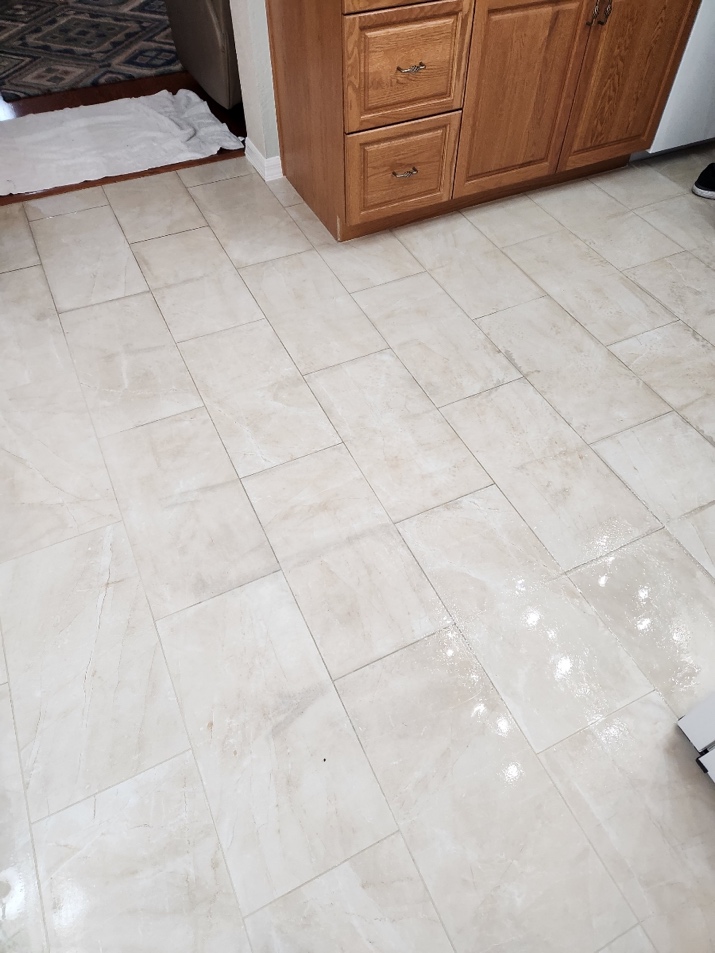
- Colour returns. Once the film is removed, tile looks clearer and more even. Grout may not return to a brand-new look in every case, but most floors show a noticeable improvement in brightness and uniformity.
- The floor is cleaner, not just shinier. A mop can make tile look shiny temporarily by leaving residue. A professional clean should look cleaner because soil and film are removed, not covered.
- A drier finish. Extraction leaves floors in better shape than heavy wet mopping. We’ll still advise basic care right after cleaning.
- Limits. Permanent staining, damage and age-related changes may remain, and we’ll tell you what to expect.
DIY or Professional? Choosing the Right Approach
| Situation | Best approach |
|---|---|
| Weekly upkeep, fresh spills, light surface dirt | DIY: sweep, then mop with a pH-neutral cleaner and change the water often |
| A small, light stain on ceramic or porcelain grout | DIY: baking soda and water paste with a soft brush |
| Grout that stays dark after mopping | Professional |
| Several rooms, or hours of scrubbing with little change | Professional |
| Natural stone (marble, travertine, limestone) | Professional, or stone-safe products only |
| Mould or mildew in grout, or sticky, hazy tile | Professional |
| Commercial floors that have only been mopped for years | Professional |
Where DIY goes wrong: DIY methods often can’t reach deep into grout, leave cleaner residue and take hours. Acidic cleaners such as vinegar can etch stone, and bleach can weaken grout. Improper cleaning can also make grout more porous, and excess water can seep into grout and encourage mould.
How to Choose a Tile and Grout Cleaning Company
Not all tile cleaning is the same. Questions worth asking any provider:
- “How do you agitate the grout lines?” If the answer is “we mop and rinse,” results usually won’t be in the same league.
- “How do you choose the solution?” It should depend on your tile type, especially for natural stone.
- “How is the solution removed?” Look for extraction, so it doesn’t dry into new residue.
- “Do you offer sealing?” And do they explain how often it should be redone?
- “What does your service cover?” A clear scope avoids surprises.
Sealing and How Often to Clean
Sealing after cleaning reduces how much dirt and liquid grout absorbs, makes routine maintenance easier and keeps floors looking cleaner for longer. Reseal about every one to two years.
Most homes benefit from professional cleaning once or twice a year, and high-traffic areas may need it every 6 to 12 months. Visible discolouration or staining means it’s time, whatever the schedule. Sweep or vacuum regularly, mop with a pH-neutral cleaner, avoid harsh chemicals, wipe up spills immediately and put mats in high-traffic areas. Entry mats help more than most people realise, because fine grit is what makes tile dull and grout dark. For more detail, see our complete guide.
If several rooms need attention, our article on whole-house tile and grout cleaning explains when it’s worth it.
Where We Serve
Steambrite Cleaning Services provides tile and grout cleaning in Clearwater, Palm Harbor, Trinity, East Lake, Tarpon Springs, Dunedin, Oldsmar, Largo, West Chase and nearby areas . Read our local guides for Clearwater, Palm Harbor, Trinity, East Lake and Tarpon Springs, or see all service locations.
We also clean carpet, vinyl floors, hardwood, wool rugs and furniture, so you can combine services in one visit. Learn more about our team.
Frequently Asked Questions
Is professional tile and grout cleaning worth it?
If your grout stays dark after mopping, you’re spending hours scrubbing, or several rooms need attention, it usually is. Professional cleaning removes buildup household tools can’t reach, and saves time.
What’s the difference between professional cleaning and mopping?
Mopping removes surface soil and can spread dirty water into grout. Professional cleaning uses a solution matched to your tile, agitation in the grout lines and steam extraction to remove soil and the solution itself.
Will my grout look brand new?
Most floors show a noticeable improvement in grout brightness and uniformity, but not every floor returns to a new-install look. Permanent staining or damage may remain.
Is professional cleaning safe for natural stone?
Yes, when the products and methods suit the stone. We identify the tile first and use pH-balanced, stone-safe solutions, because acids can damage stone.
What’s a dual wash?
For heavily soiled floors, we may recommend two passes: the first lifts the worst of the grime, and the second refines the clean and removes leftover residue.
Should I seal my grout after cleaning?
We recommend it. Sealing reduces how much dirt and liquid grout absorbs and makes upkeep easier. Reseal about every one to two years.
Do you clean commercial tile floors?
Yes. Rotary scrubbing and steam extraction can help commercial floors that have been maintained with mop-and-bucket methods for years.
