


Your sofa is probably the most used piece of furniture in the house. It’s where you relax, entertain and watch movies, and over time it absorbs dust, body oils, pet dander, spills and odours. That’s true for homes and for businesses with waiting areas, and Clearwater’s humid climate makes it harder still.
DIY methods can handle small spills, but a professional deep clean is what extends the life of your furniture and keeps your indoor environment healthier. This guide covers fabric types, what the care codes mean, how to handle spills safely, how often to clean, and what to expect from a professional visit.

Start With Your Fabric
Before choosing any cleaning method, know what your sofa is made of:
- Natural fibres (cotton, linen, wool) are more delicate and can shrink, fade or discolour if cleaned improperly.
- Synthetic fibres (polyester, nylon, microfibre, acrylic) are durable and often stain-resistant, though they can attract oil-based stains.
- Blends combine the two and balance comfort with durability.
- Leather needs specialised products and methods to avoid drying out or cracking.
Read the cleaning code tag
Most sofas carry a manufacturer tag showing the safest cleaning approach:
| Code | What it means |
|---|---|
| W | Water-based cleaners are suitable |
| S | Solvent-based cleaners only |
| WS | Water-based or solvent-based |
| X | Vacuum only; professional cleaning |
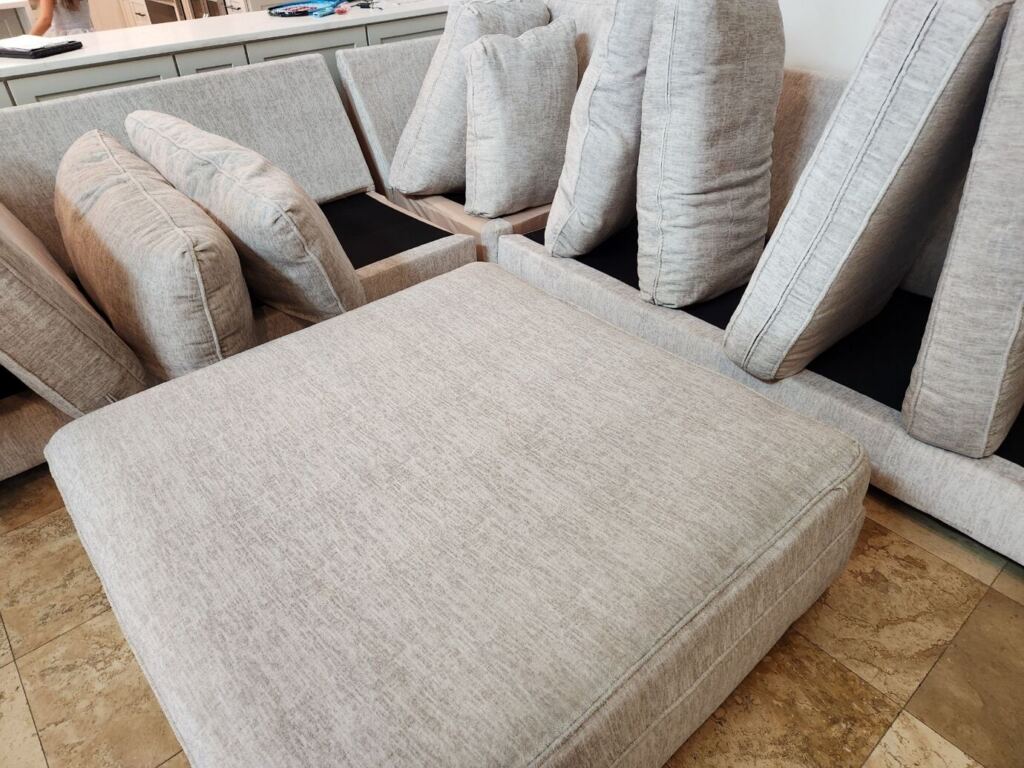
Handling Spills and Stains Safely
Acting quickly matters most, and so does staying gentle. Rubbing pushes liquid deeper into the fabric and spreads the stain.
- Blot, never rub, with a clean, dry cloth to absorb as much as possible. Scrape off solids first.
- Check the code tag to see whether water-based cleaners are safe for your fabric.
- For a W or WS fabric, dab with a small amount of mild, pH-neutral soap in water, working from the outside of the stain inwards.
- Spot test first in a hidden spot, such as under a cushion or on the back, to check for colour change.
- Blot with a clean damp cloth to remove soap residue, then blot dry and let the area air dry.
- If it doesn’t lift, stop and call a professional.
We’d avoid improvised mixtures such as vinegar, bleach or strong solvents. They can leave rings, affect dyes and leave residue that attracts more dirt. Leather, X-coded fabrics, ink, oil-based and pet stains are all better left to a professional, who can identify the stain and match the method to your upholstery. Store-bought cleaners that work on one fabric can damage another, and many DIY solutions leave residue behind.
Why Deep Cleaning Matters
Vacuuming removes loose surface dust, but it doesn’t reach what has settled deep in the cushions and frame: body oils, allergens, dust mites and trapped dirt. Upholstery acts like a sponge for dust, pet dander, pollen and mould spores. When you sit down, particles get released back into the air, which can aggravate allergies and respiratory conditions. The EPA’s guidance on indoor air quality covers why this matters at home.
Deep cleaning also protects your investment. Dirt and body oils trapped in the fibres act like sandpaper and wear down the fabric, so regular professional cleaning can help slow that wear. It can also freshen furniture that has absorbed smells from pets, cooking, sweat or smoke, since air fresheners only mask what’s trapped in the fabric.
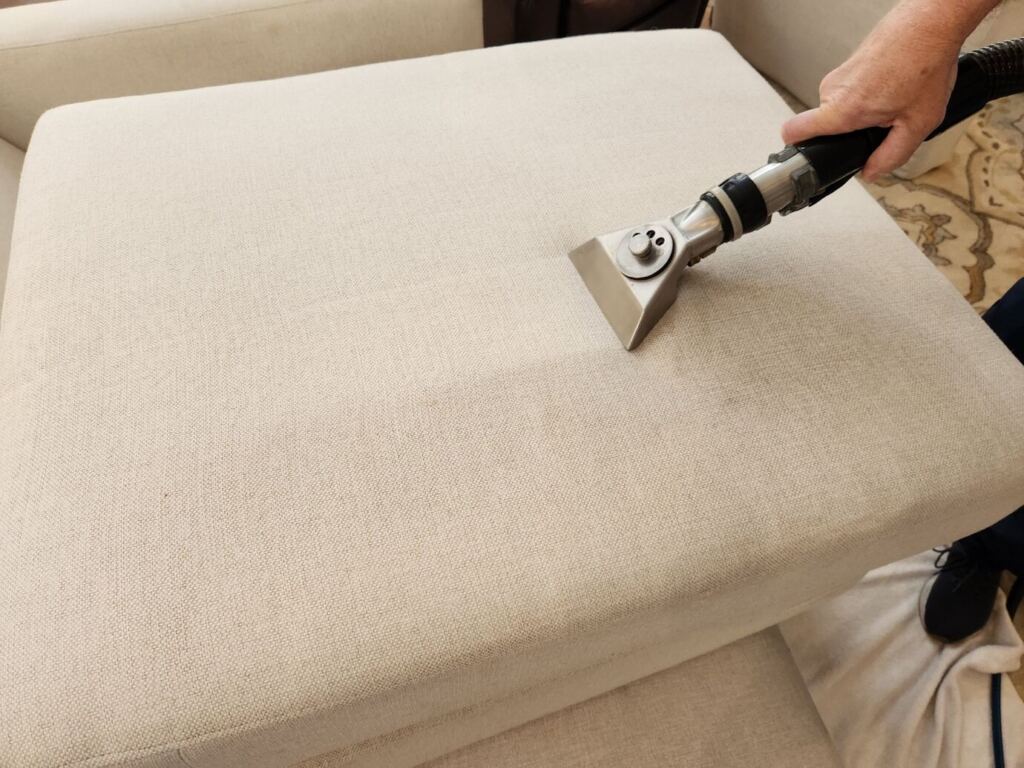
How Often Should You Deep Clean a Sofa?
- Most homes: every 12 to 18 months
- Busy homes with pets or children, and commercial spaces: every 6 to 9 months
- Any time you see stains, dull colour or smell odours that won’t go away
Looking After Your Sofa Between Cleanings
- Vacuum weekly with an upholstery attachment, including the seams and crevices where dirt collects.
- Rotate and flip cushions every few months so wear spreads evenly and cushions sag more slowly.
- Use throws or armrest covers to catch oils and spills, especially in homes with children and pets or in commercial seating.
- Consider a fabric protector. It makes spills easier to blot, but it doesn’t make furniture stain-proof and it wears off, so it needs reapplying, especially after a professional clean.
- Keep sofas out of direct sunlight. Prolonged sun fades fabric. Curtains or blinds help.
- Control humidity. Clearwater’s coastal climate encourages mildew. Ventilate rooms, and use a dehumidifier if needed.
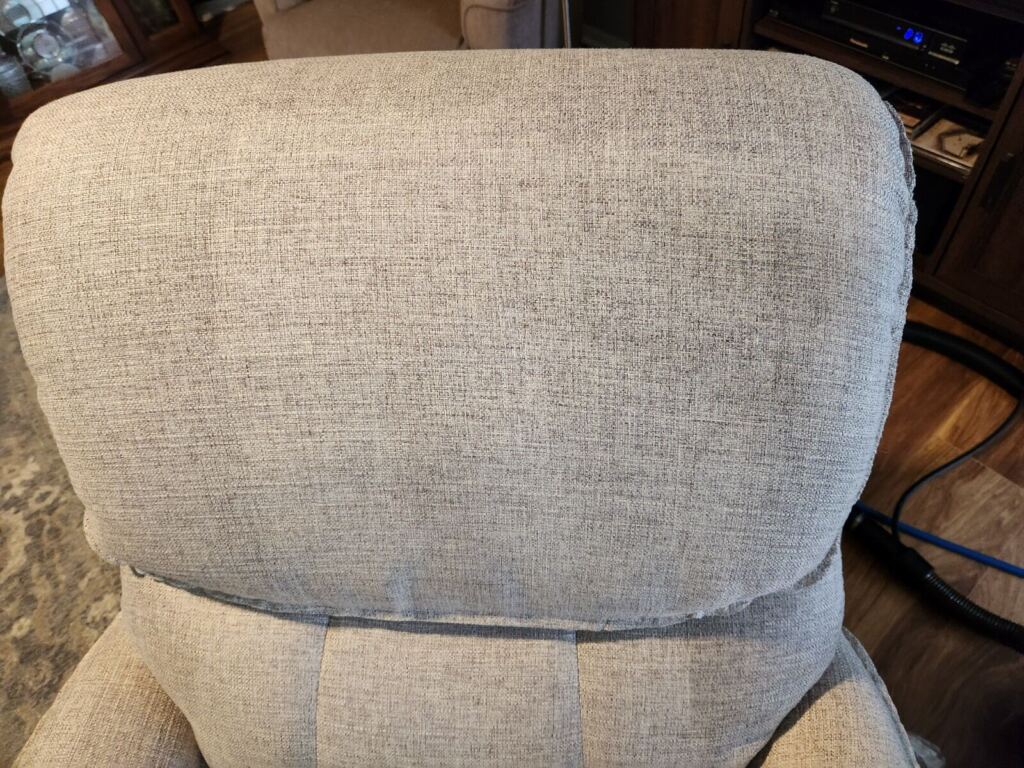
What Professional Sofa Cleaning Involves
- Fabric check. We identify the fabric and its cleaning code, and test for colour stability.
- Vacuuming and pre-treatment. Loose soil is removed and stains and soiled areas are treated.
- Deep cleaning and extraction. Steam (hot water extraction) works for many fabrics and lifts out dirt, grease and allergens. We adjust moisture and settings to suit your upholstery, because excessive moisture can damage some materials. Delicate or solvent-coded fabrics call for low-moisture or specialist methods.
- Drying and finishing. Extraction takes up as much moisture as possible and we advise on airflow so mildew doesn’t get a chance.
- Optional extras. Odour treatment and a fabric protector can be added where they help.
Many sofas look fresher and smell cleaner afterwards. Old, set-in stains and dye damage may lighten without disappearing entirely, and we’ll tell you what to expect before we start.
Sofas in Businesses
In waiting rooms, lobbies and lounge areas, seating is part of the first impression, and busy furniture picks up soil faster. Regular upholstery cleaning, typically every 6 to 9 months in high-traffic spaces, keeps seating looking professional.
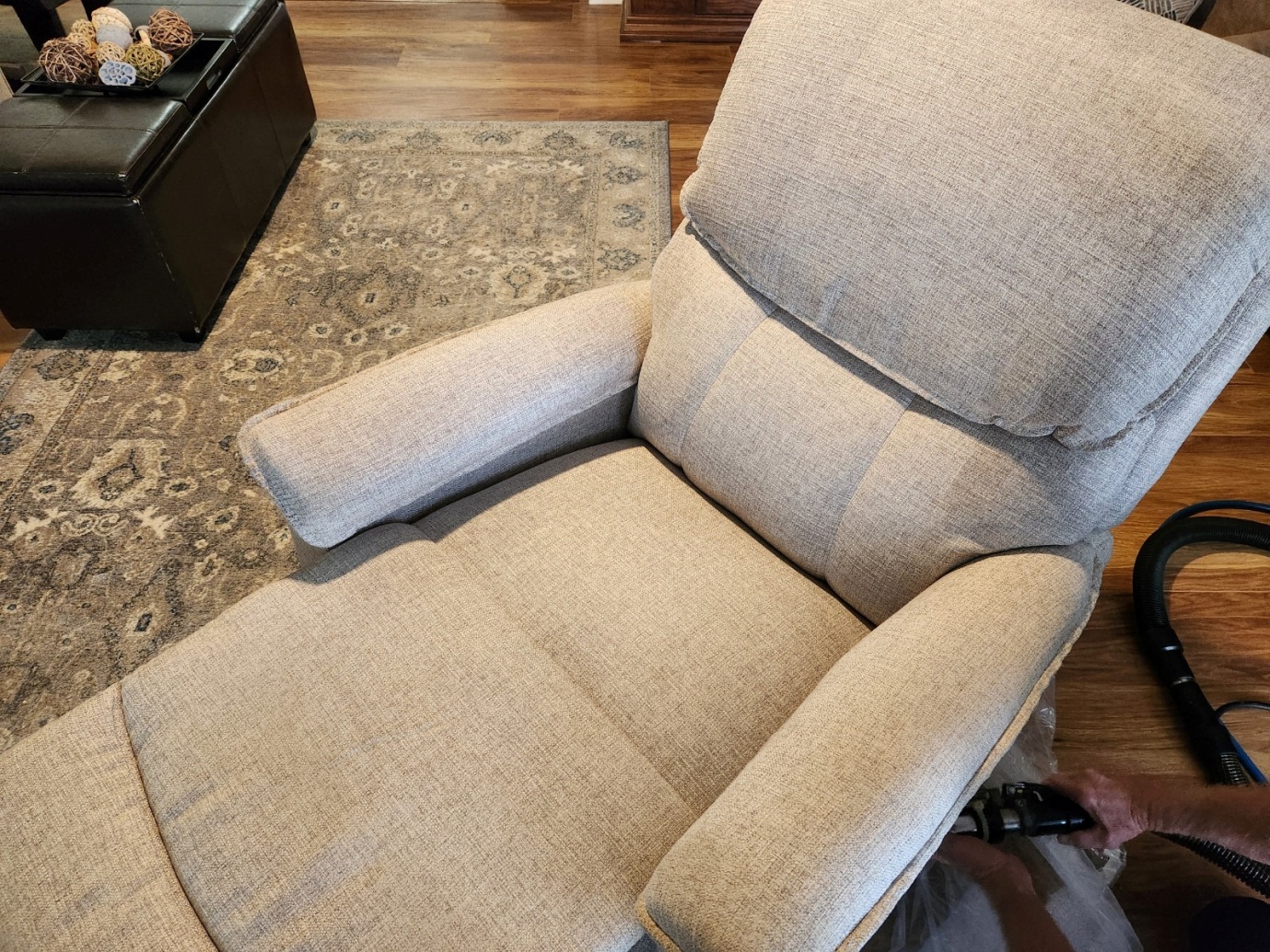
Beyond the Sofa: Armchairs, Ottomans and More
Sofas get the most use, but armchairs, loveseats, recliners, ottomans and upholstered headboards benefit from the same attention. If you’re refreshing a whole room, our carpet cleaning, tile and grout cleaning and hardwood floor cleaning can be done during the same visit.
Planning a new-furniture refresh? Dust weekly, use a protector on new upholstery from the start and follow the manufacturer’s care instructions. Taking care from the first day is far easier than rescuing a stained sofa later.
Where We Serve
Steambrite Cleaning Services provides upholstery and sofa cleaning in Clearwater, Trinity, Tarpon Springs, East Lake, Palm Harbor and nearby areas . See our Clearwater page or all service locations. We also clean wool rugs, so you can combine services in one visit.
Frequently Asked Questions
How often should a sofa be professionally cleaned?
Every 12 to 18 months for most homes. Busy households with pets or children, and commercial spaces, may need it every 6 to 9 months.
What do the codes W, S, WS and X on my sofa tag mean?
W means water-based cleaners are suitable, S means solvent-based only, WS means either, and X means vacuum only. Professional cleaning is recommended for X-coded fabrics.
How do I treat a spill on my sofa before it is cleaned?
Blot with a clean, dry cloth, check the code tag, and use a small amount of mild soap in water on W or WS fabrics. Spot test first and blot dry. Don’t rub, and stop if the stain doesn’t lift.
Is steam cleaning safe for all upholstery?
Not all. Steam (hot water extraction) works well on many fabrics, but too much moisture can damage some materials. We check the fabric and code first and adjust the method.
Can professional cleaning remove pet odours from a sofa?
It can help considerably, because odours come from residue trapped in the fabric. Severe or old contamination may be harder to resolve, and we’ll explain what to expect.
How long does a sofa take to dry?
It depends on the fabric, ventilation and humidity. Running fans or the air conditioning helps, and we’ll advise you on drying after the visit.
Do you clean upholstery for businesses?
Yes. Waiting-room and lounge seating can be cleaned on a regular schedule.
