


Tile floors make a home feel clean, practical and easy to look after. But keeping them that way takes more than occasional sweeping and mopping. Dirt settles into textured surfaces, spills leave residue behind, and grout lines slowly collect soil that ordinary household cleaning doesn’t fully remove.
This guide explains why tile and grout get dirty, why grout needs extra attention, how professional tile and grout cleaning works, how often to do it, and how to maintain your floors in between.
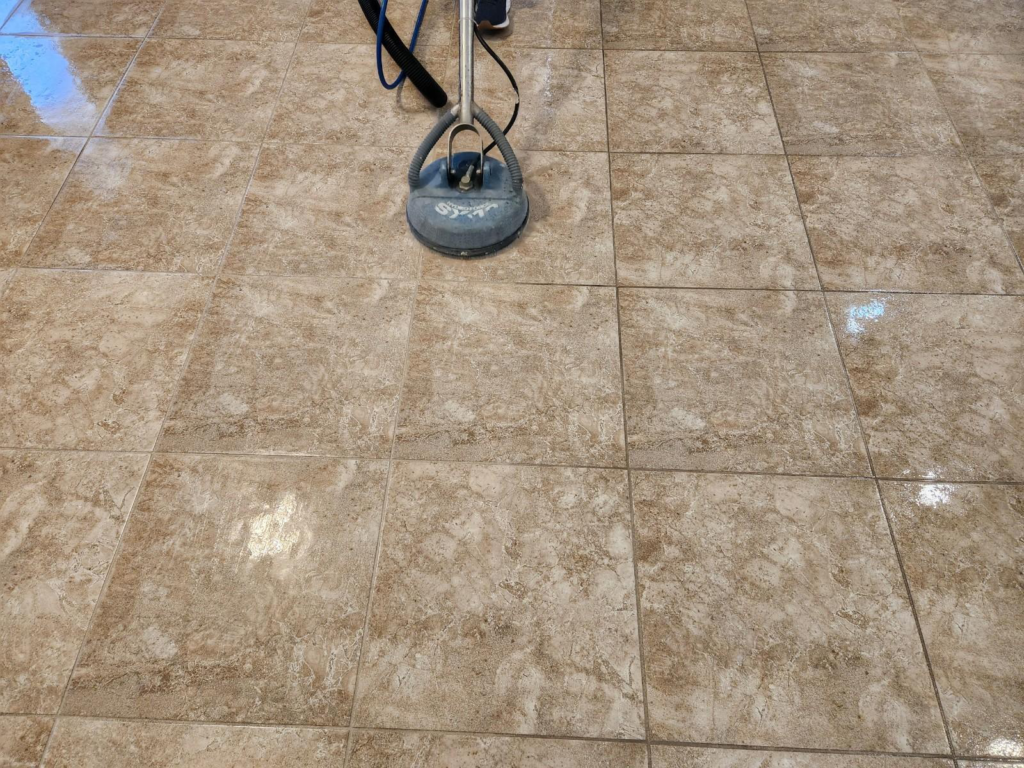
Why Tile and Grout Get Dirty
Tile is popular because it’s durable and relatively easy to maintain. Easy to maintain doesn’t mean it’s protected from dirt. Every step across a floor deposits dust, soil and debris, and everyday life adds to it:
- Foot traffic. Shoes bring in soil, dust, sand and outdoor debris.
- Food and drink spills. Kitchens collect sticky or greasy residue and crumbs pressed into grout.
- Pets. They track dirt across floors.
- Soap and product residue. Bathrooms build up film around the areas used most.
- Moisture. Damp areas make grout harder to keep clean. The EPA recommends fixing water problems promptly and keeping damp areas dry, which matters in Florida’s warm, humid conditions.
- Cleaning product residue. Too much cleaner, or harsh products, can leave a sticky film that attracts more dirt.
Mopping removes surface soil, but the water gets dirty as you work, and it settles into the low points of the floor, which are the grout lines. That’s why floors can look dull even when you clean them regularly.
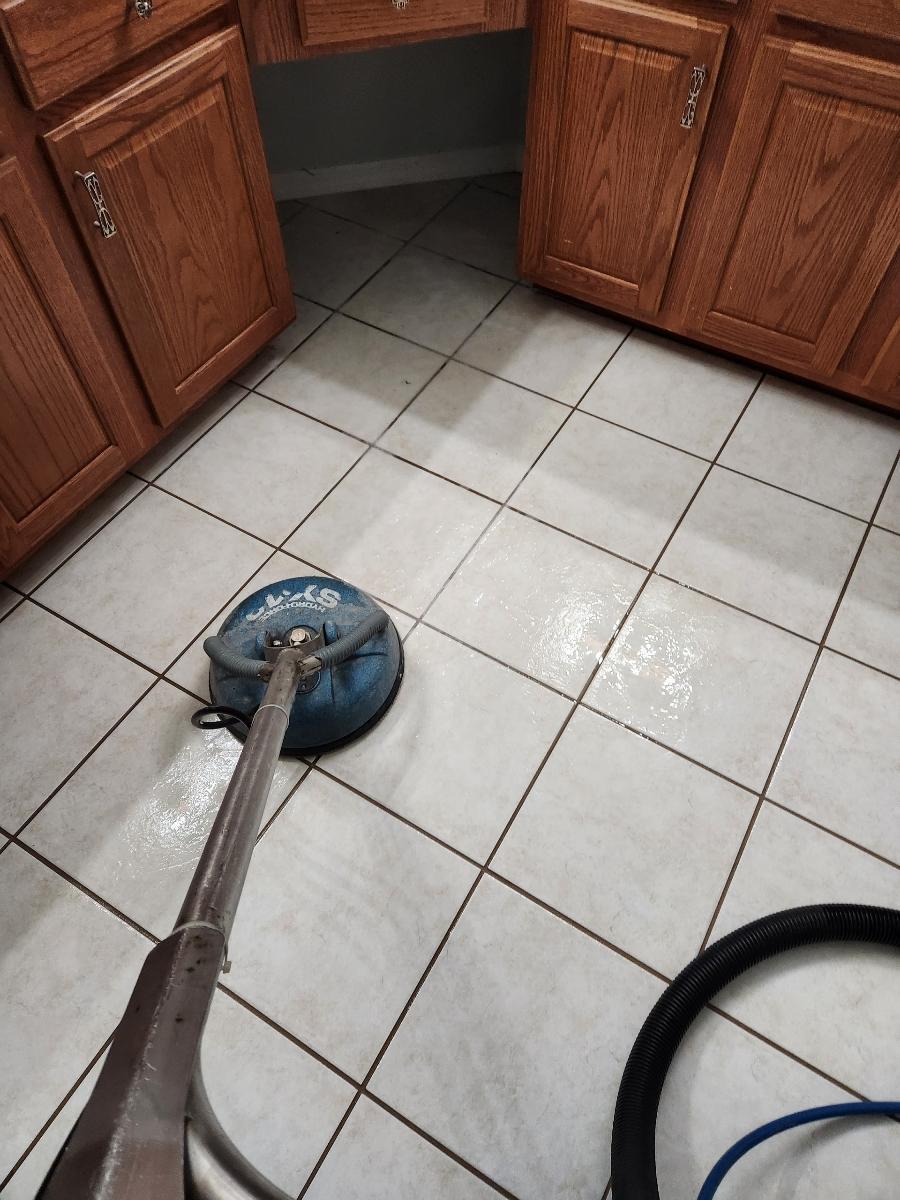
Tile Types and What Each Needs
Not every tile should be cleaned the same way. The material, finish, texture and condition all affect which approach is right. Using the wrong product can damage a floor instead of improving it. If in doubt, follow the manufacturer’s recommendations or ask a qualified professional.
| Tile type | What to know |
|---|---|
| Ceramic | Durable and easy to maintain. Glazed surfaces resist everyday moisture and staining, but the grout around them still collects soil. |
| Porcelain | Dense and generally easier to maintain than natural stone. Textured porcelain and its grout lines can still trap dirt, especially in busy areas. |
| Natural stone (marble, travertine, limestone, slate) | Needs more specialised care. Some stones are sensitive to acids. The Natural Stone Institute recommends knowing the stone’s composition and using appropriate, non-acidic products. |
| Saltillo and terracotta | Porous, so they need a method and solution matched to the material. |
Learn more in our guide to tile and grout cleaning for all tile types.
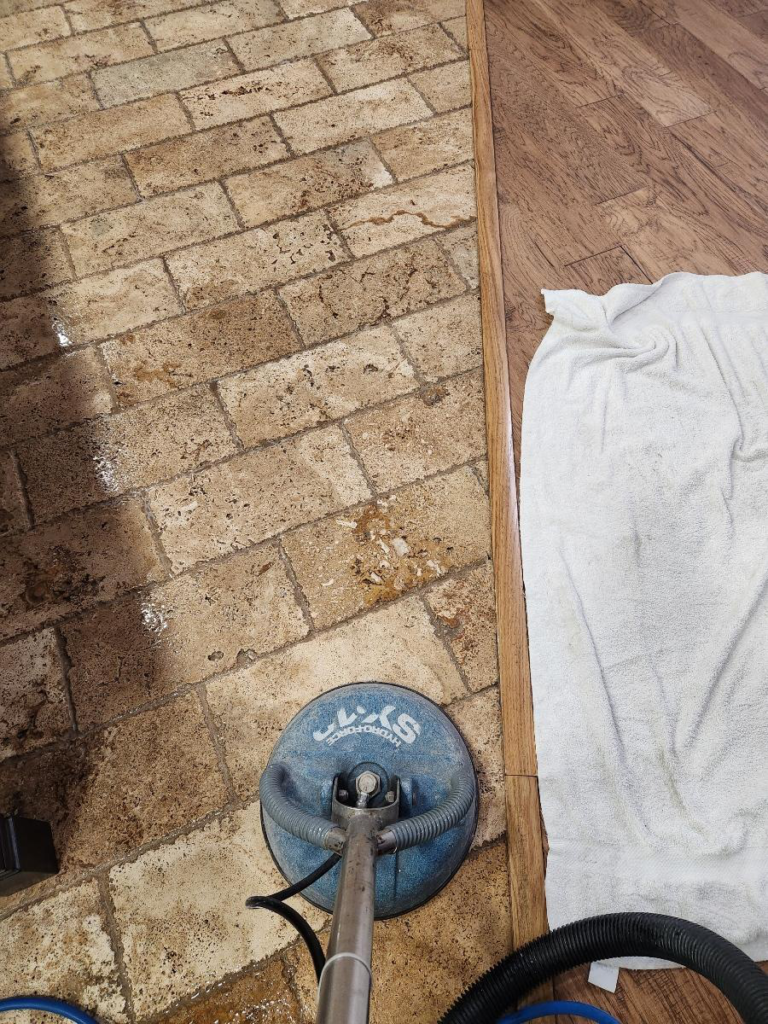
Why Grout Is the Hardest Part to Clean
When a tile floor stops looking fresh, the grout is usually the reason. Tile can be smooth, while grout is more porous and sits recessed between tiles. Ceramic and porcelain resist liquids well, but cement-based grout is much more porous, which is why grout joints need maintenance. As Good Housekeeping’s experts note, grout can harbour dirt, mould, grime and residue.
A mop passes over the surface without reaching narrow lines, and scrubbing by hand is time-consuming and tiring across a whole home. As soil builds up, grout turns gray, brown or yellow, darker where traffic is heavy and where corners and edges get missed. The contrast with clean tile makes each line stand out, so the floor looks dirty even when the tile is in good shape.
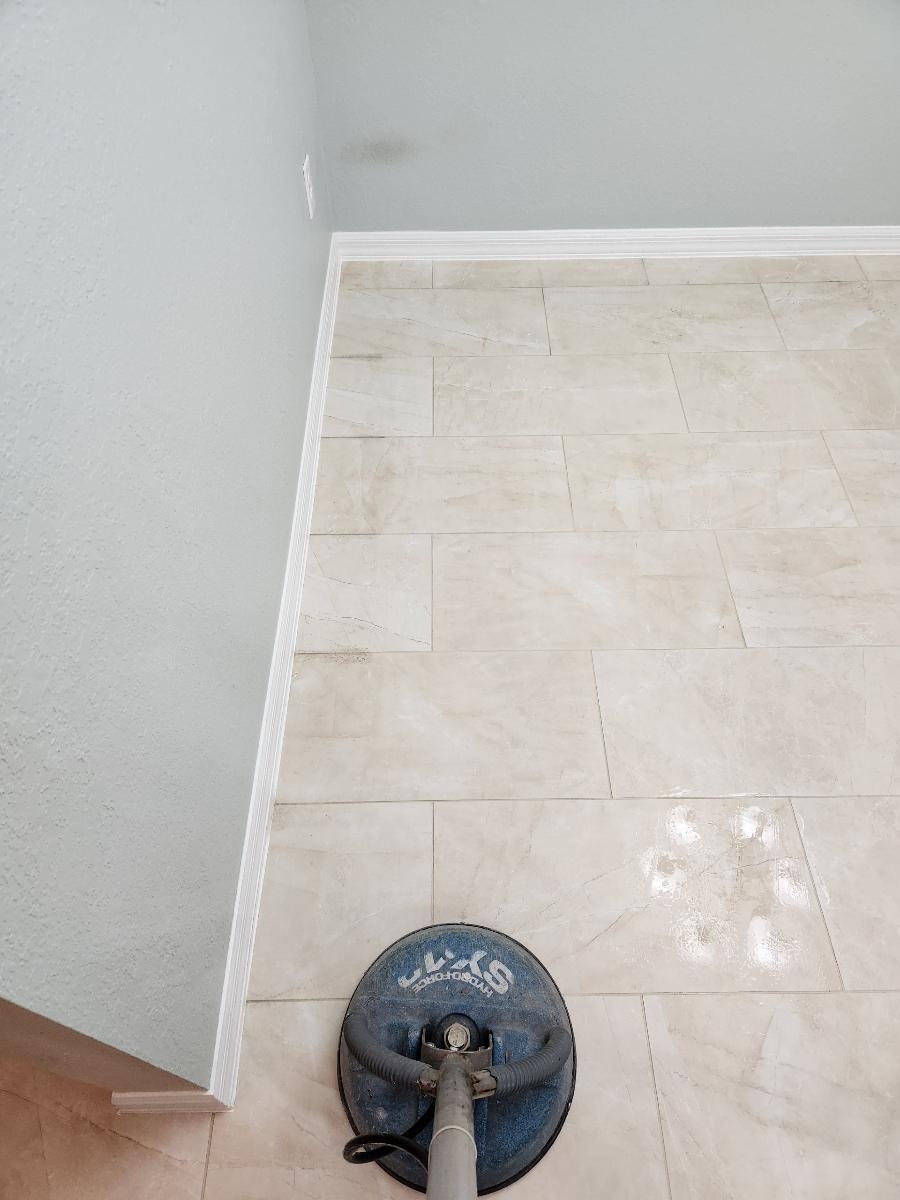
How Professional Tile and Grout Cleaning Works
Professional cleaning goes beyond what routine maintenance reaches. The process is based on your floor, not a one-size-fits-all method:
- Assessment. We identify the tile material and its condition, and check for loose grout or cracked tile so cleaning is safe for the floor as it is today.
- Pre-treatment. A cleaning solution suited to your tile type and soil is applied evenly across the floor and left to dwell, so it can break the bond between dirt and the surface. This reduces the need for heavy scrubbing.
- Agitation. Grout brushes made to fit into the lines loosen packed dirt without wearing the tile around them.
- Steam and hot water extraction. Heated water is applied with a tool that contains it and vacuums it up at the same time, so dirt, grease and cleaning residue are removed instead of left behind. Floors dry faster, which reduces moisture in the grout.
- Extra attention where needed. Heavily soiled or high-traffic areas get additional work.
- Final assessment. We check the results and identify any discolouration that’s permanent or caused by damage rather than removable soil.
- Sealing (recommended). A clear sealer creates a barrier on the grout, so spills bead up on top and can be wiped away before they stain.
Steam cleans the existing tile and grout. It’s not honing or polishing, and it doesn’t change the finish. How much improvement you see depends on the age and condition of the floor, the tile type, the state of the grout and how long the dirt has been there.
When rotary scrubbing is needed
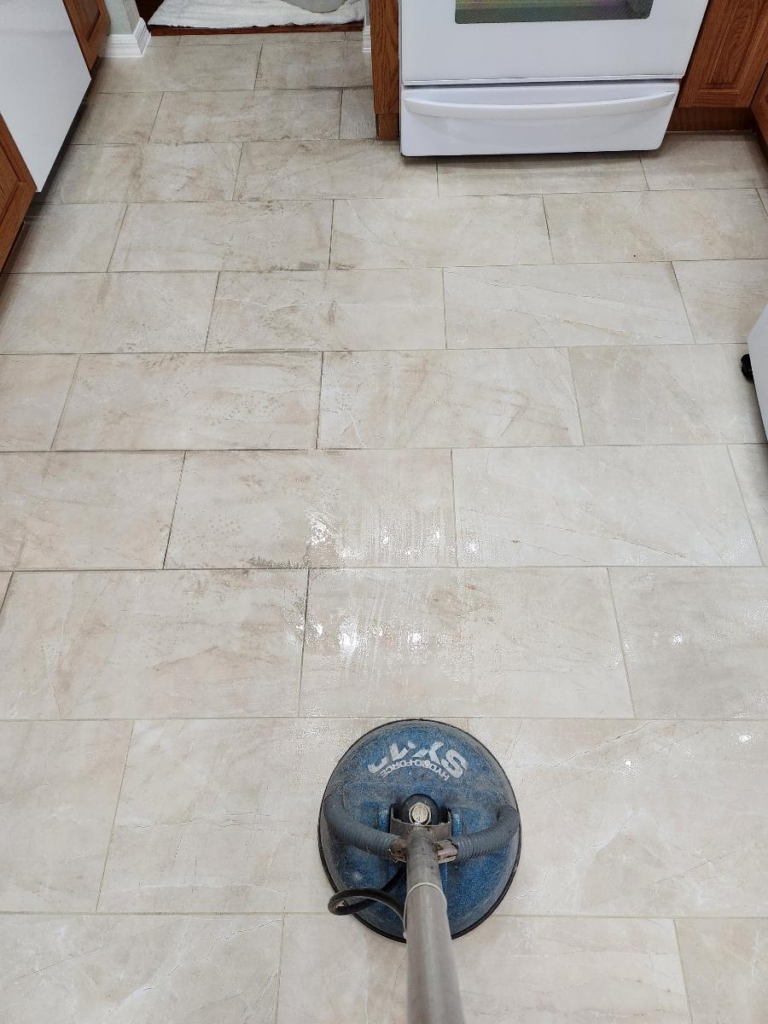
Some floors need extra agitation before extraction. A rotary scrubber uses controlled spinning brushes or pads to break up stubborn grime. It suits restaurants, commercial spaces and older homes with years of buildup in textured tile and porous grout. It’s an additional service, separate from the standard restorative process, and we decide when it’s appropriate based on the tile material and floor condition. Natural stone needs gentler methods than porcelain or ceramic.
Signs You Need Professional Cleaning
A floor doesn’t need to be visibly filthy before professional service is worthwhile. Gradual changes are usually the first sign that routine cleaning isn’t working. Consider a professional clean if:
- Grout has turned gray, brown or yellow, or stays dark after mopping
- The floor looks dull despite regular cleaning, or never looks fully clean
- High-traffic areas look noticeably worse than the rest of the floor
- Dirt builds up along edges, in corners or in textured tile
- Tile feels sticky or looks hazy
- You see mould or mildew, or smell odours, in grout
- DIY cleaning takes hours and doesn’t give the results you want
You don’t need to wait until the floor is extremely dirty. Periodic cleaning keeps ongoing maintenance easier.
DIY Tile and Grout Cleaning: What Works and What Doesn’t
DIY care has an important role. Sweeping or vacuuming, wiping fresh spills and mopping with a suitable cleaner control everyday dirt and reduce what builds up between professional visits. The two complement each other: routine care controls everyday soil, and professional cleaning deals with accumulated buildup across larger areas.
| Approach | Verdict |
|---|---|
| Sweeping, vacuuming, wiping spills, mopping with a pH-neutral cleaner | Essential. Use microfiber mops and change the water often. |
| Baking soda and water paste | Good for light stains on ceramic or porcelain grout, with a soft brush |
| Hydrogen peroxide and dish soap | Can help with tougher grout stains. Test a hidden spot first and rinse well |
| Vinegar and lemon juice | Avoid. Acids can etch natural stone and wear down grout and sealer |
| Bleach and ammonia | Avoid. They can weaken grout, discolour it and strip the sealer |
| Hard brushes and scouring pads | Avoid. They wear down grout and scratch tile |

Common mistakes
- Using too much cleaner. Excess product leaves a sticky residue that attracts dirt. Use the right amount and rinse thoroughly.
- Using the wrong cleaner. Check it suits your tile and grout.
- Scrubbing too hard. Hours with a stiff brush isn’t the answer for widespread buildup.
- Treating every tile the same. Ceramic, porcelain and natural stone are different.
- Ignoring spills and moisture. Clean spills promptly and ventilate bathrooms.
- Waiting too long. The longer soil sits, the harder it is to remove.
How Often Should Tile and Grout Be Cleaned?
There’s no exact rule. The right schedule depends on foot traffic, moisture, pets and children, how busy your kitchen is and the condition of the grout. These are general guidelines:
| Space | Professional cleaning |
|---|---|
| Standard household tile | Once or twice a year |
| High-traffic areas (kitchens, hallways, bathrooms, entryways) | Every 6 to 12 months |
| Businesses and commercial spaces with heavy traffic | Every 3 to 6 months |
Stubborn stains, discolouration or more mould mean it’s time to book, whatever the schedule. Sealed grout is easier to maintain. Reseal about every one to two years, after a deep clean, when the grout is clean and dry.
Tile Cleaning Room by Room
Kitchens
Kitchens are among the busiest rooms. Cooking, food prep and spills lead to grease residue and crumbs pressed into grout. Mopping maintains the floor, but heavily used spots near the sink, counters and appliances eventually need a deeper clean.

Bathrooms
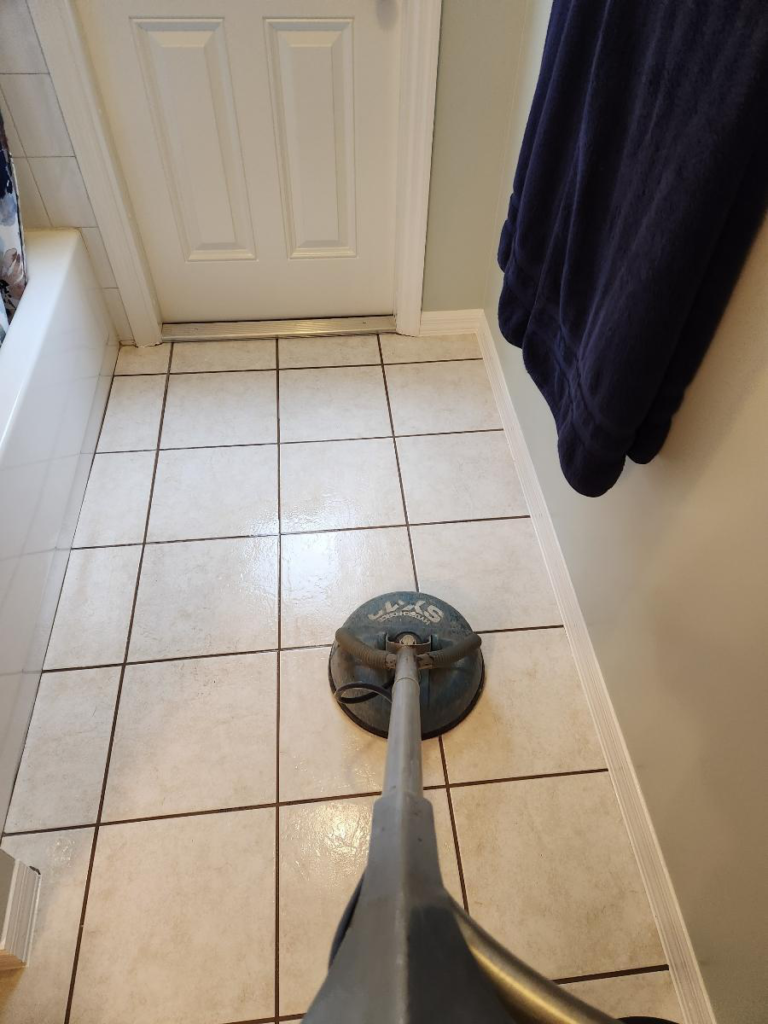
Moisture, soap residue, personal-care products and traffic build up on tile and grout. Hand-scrubbing works for light upkeep, but it gets hard when the whole room, or several bathrooms, need attention. Wipe up spills, cut down standing moisture and ventilate to support a cleaner floor.
Hallways, entryways and high-traffic areas
Entryways are where outdoor dirt first reaches your floors, and it spreads into hallways and nearby rooms. Grout here often gets darker than in lower-traffic rooms. Entry mats, regular sweeping and prompt removal of visible dirt cut down future buildup.
Living areas and other tiled rooms
Tile is now used in living rooms, dining rooms, bedrooms and sunrooms. Open walking paths get heavy traffic, while areas around furniture collect dust that is cleaned less often. Pet hair, outdoor soil and household residue add up, and large spaces take more effort than a small bathroom.
Whole-house tile and grout cleaning
Whole-house service cleans multiple tiled areas in one appointment. It’s useful when tile runs from room to room, because cleaning one section can make the difference with uncleaned areas more obvious. It also gives you a more consistent result, and it’s convenient before hosting guests, moving in, a seasonal change or catching up on postponed maintenance.
To get the most from it, walk through your home in natural light, compare busy and quiet areas, and list every tiled space, including bathrooms, kitchens, hallways, foyers, laundry rooms and dining areas. Point out heavily soiled spots before work begins.
Vinyl and Other Floors
Many homes mix tile with other floors, and we can look after them in the same visit:
- Vinyl: Steam cleaning can also be used on sheet vinyl, luxury vinyl plank (LVP) and luxury vinyl tile (LVT). See our vinyl floor cleaning.
- Wood and laminate: We offer hardwood and laminate floor cleaning.
- Carpet, rugs and upholstery: Carpet steam cleaning, wool rug cleaning and furniture and upholstery cleaning, including multi-piece sectionals.
What we don’t do: VCT (vinyl composition tile) floors are not cleaned or waxed, and we don’t wax any other type of floor. Our focus is steam cleaning suitable flooring, not wax or refinishing.

Preparing for Service and Caring for Your Floors Afterwards
Before your appointment
- Move small objects and rugs out of the areas being cleaned if you can.
- Point out heavily soiled sections, discolouration and unusually busy rooms.
- Ask how large furniture might affect access, because results depend on the areas we can reach.
- Tell us the tile type if you know it.
After your appointment
- Sweep or vacuum regularly to remove grit and dust.
- Wipe up spills when they happen, especially in kitchens and entryways.
- Use a pH-neutral cleaner suitable for your floor, in small amounts, and change mop water often.
- Ventilate bathrooms and keep damp areas dry.
- Use entry mats, and pay special attention to high-traffic areas, which show buildup first.
- Reseal grout about every one to two years, as sealing protects against stains and moisture.
The Benefits of Professional Tile and Grout Cleaning
- A better-looking home. Removing soil brings back contrast and makes rooms look fresher.
- A healthier home. Porous grout can trap allergens, bacteria and mould spores. Cleaning helps remove them.
- Longer-lasting floors. Removing abrasive grit helps prevent scratches on the glaze and breakdown of grout, which can cause cracking and loose tiles.
- Spotting problems early. Cleaning shows cracked tiles or failing grout that need repair.
- Home value. Clean tile and grout suggest a well-cared-for home to buyers.
- Saves time. No hours on your hands and knees.

Where We Serve
Steambrite Cleaning Services provides tile and grout cleaning for homes and businesses across our service area. Read our local guides: Clearwater, Palm Harbor, Trinity, East Lake, Tarpon Springs and New Port Richey. See all service locations.
Frequently Asked Questions
Why does my grout look dirty even though I mop?
Grout is porous and recessed, so soil, grease and residue settle in it. Mopping removes surface dirt but may not clear what has built up in the grout lines.
Is professional tile and grout cleaning worth it?
If grout stays dark despite regular cleaning, or you’re spending hours scrubbing, it can be. Professional cleaning addresses accumulated soil across the floor, and routine care keeps it that way.
How often should tile and grout be cleaned professionally?
Most homes need it once or twice a year. High-traffic areas may need it every 6 to 12 months, and busy commercial spaces every 3 to 6 months.
Will cleaning make my grout look brand new?
Not necessarily. Cleaning removes accumulated soil and improves appearance. Permanent staining, damage or age-related changes may remain, and we’ll tell you what to expect.
Is steam cleaning safe for all tile?
It’s suitable for most tile when the solution and method are matched to the material. Natural stone needs non-acidic products and gentler methods. For more, see does steam cleaning damage grout?
Should I seal my grout?
We recommend it after cleaning. Sealed grout resists stains and moisture and is easier to maintain. Reseal about every one to two years.
Do you clean vinyl, LVP and LVT?
Yes, steam cleaning can be used on sheet vinyl, LVP and LVT. We don’t clean or wax VCT floors, and we don’t wax any floors.
Can you clean tile in several rooms in one visit?
Yes. Whole-house tile and grout cleaning covers multiple rooms in one appointment, and can be combined with carpet, upholstery or other floor services.
